

Butterfly Arc
History and records:
Inaugurated in 1988 by Enzo Moretto and Gabriella Tamino, the Butterfly House represents a historic milestone in the Italian and European museum landscape. It was indeed the first museum structure of its kind in Italy and among the first in the world, positioning itself as a pioneer in the conservation of tropical ecosystems and scientific dissemination. After more than thirty-five years of activity, this jewel nestled in the Euganean Hills Regional Park is today internationally recognized as a center of excellence for environmental education and the study of lepidoptera. The vision of the founders transformed an audacious idea into a reality that continues to inspire generations of visitors, scholars, and nature enthusiasts.
The immersive experience: The tropical greenhouse:
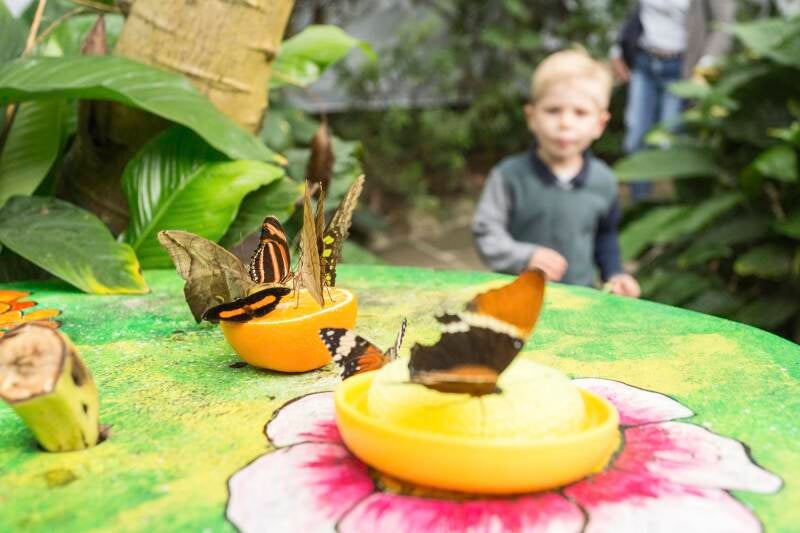
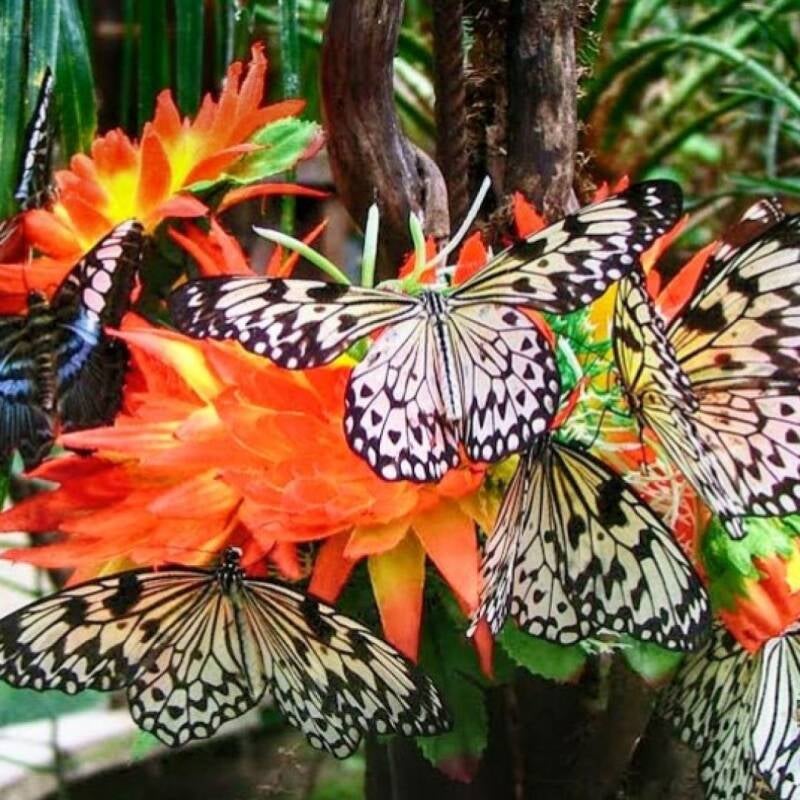
The beating heart of the Butterfly House is an extraordinary 1,500 m² glass greenhouse that faithfully recreates the tropical ecosystems of three continents: Amazonia, Africa, and Asia. This cathedral of biodiversity houses a botanical collection of rare beauty, with carefully selected exotic plants: majestic palms, large-leaved banana trees, brightly colored orchids, and climbing passionflowers that intertwine creating rainforest scenarios. The microclimate is controlled with scientific precision to ensure optimal temperature and humidity, allowing the harmonious coexistence of more than 100 different species of butterflies, for a total of over 400 specimens that fly freely around visitors. The effect is that of a real dive into the tropics, where every corner reveals a natural wonder and where the rustle of wings mixes with the dripping of water and the intense scent of flowers.
Thematic gardens:
The greenhouse is divided into three thematic areas that reproduce specific ecosystems:
- Amazonian Garden: dominated by the iconic Morpho with metallic blue wings that shine like living jewels, and by heliconids with very colorful patterns that seem painted by an artist. Here you can observe the survival strategies of South American butterflies, their interaction with plants such as passionflowers, and the fundamental role they play in pollination.
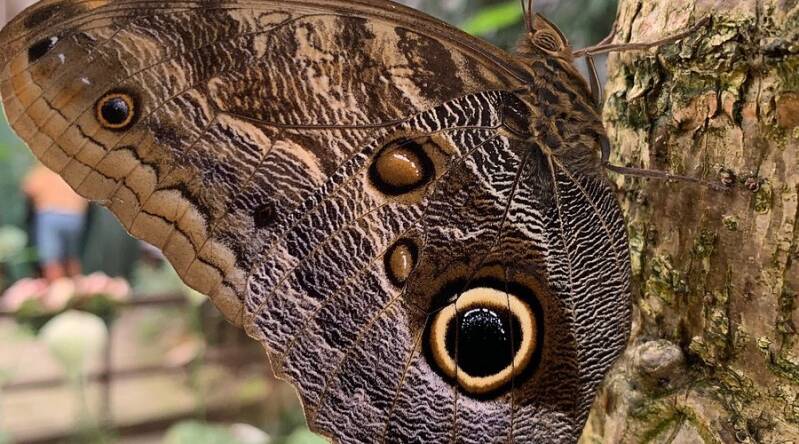
- Afro-tropical Garden: a habitat designed to house the majestic giant African moths, nocturnal creatures of impressive size and sophisticated liveries. This area reveals the secrets of crepuscular and nocturnal insects, often less known but just as fascinating as their diurnal cousins.
- Indo-Australian Garden: dedicated to the essential host plants for the growth of caterpillars, this section illustrates the delicate balance between insects and vegetation. Here one understands how each species of butterfly is linked to specific plants, a perfect example of coevolution that has lasted for millions of years.
The life cycle:
One of the most exciting experiences offered by the Butterfly House is the direct observation of the complete life cycle: from the tiny eggs carefully laid on the leaves, to the voracious caterpillars that grow before your eyes, up to the pupae with sculptural shapes that hide nature's most extraordinary metamorphosis, finally reaching the adult butterflies that emerge with still damp wings and prepare for their first flight, with explanations on:
- Batesian and Müllerian Mimicry: evolutionary strategies that allow non-poisonous butterflies to imitate toxic ones (Batesian), or multiple poisonous species to share the same warning patterns to reinforce the message to predators (Müllerian).
- Aposematic colorations (warning of toxicity): bright and contrasting colors that signal toxicity or bad taste, a universal language in the animal kingdom that says "don't eat me".
- Ethology: the observation of courtship behaviors, with elaborate aerial dances, and reproductive strategies that guarantee the survival of the species. One can see males competing for territory or females carefully selecting the plants where to lay their eggs.
Fairy Wood: a mythological appendix
In addition to the scientific greenhouse, the Butterfly House offers a completely different but complementary experience in the 6,000 m² wooded park surrounding the structure. The Fairy Wood is a narrative path that weaves together nature and fantasy, where local biodiversity meets European folklore and mythology:
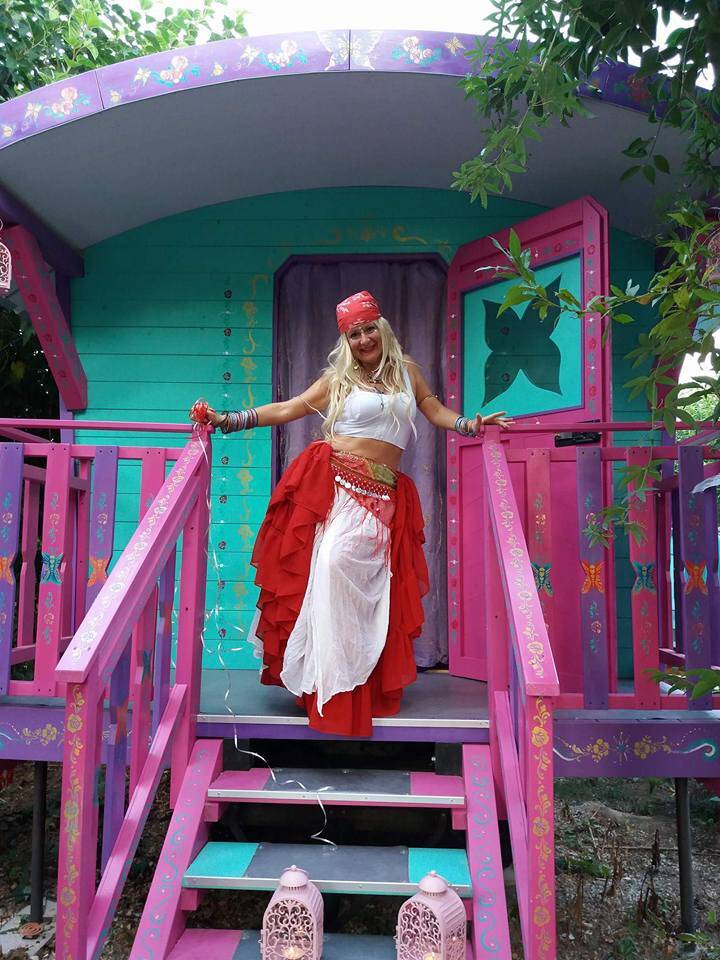
- Fairytale characters: gnomes, elves, witches, and fairies: among these the King of the Trolls, who tells short stories that have to do with the magical and invisible world, or the Gypsy Caravan, with a real speaking Oracle inside, which can be questioned for wise responses in both Italian and English.
- Sacred trees: oak, yew, and rowan linked to the Druid tradition.
- Aquatica: an area dedicated to local aquatic ecosystems, with ponds hosting dragonflies, frogs, and marsh plants, showing how biodiversity also expresses itself in the humid environments of the Euganean Hills.
- Tropical moth aviary: a structure that allows for a close observation of giant moths, often misunderstood creatures but of extraordinary beauty, with wingspans that can exceed 25 centimeters.
Services and activities
- Interactive workshops: handling of caterpillars and tropical insects.
- Thematic exhibitions: symbolism of colors, exhibition dedicated to the monarch butterfly.
- Refreshment area: picnic spots and bar with local products.
- Reservations: recommended for groups and school groups (contacts: segreteria@butterflyarc.it).
Practical advice
- Opening period: Butterfly House follows a seasonal calendar, with closure during the winter months when climatic conditions make it more difficult to maintain tropical ecosystems. It is advisable to check the opening dates on the official website before planning the visit.
- Visit duration: 2-3 hours to explore both areas.
- Clothing: comfortable shoes and light clothing (tropical climate).
Why visit it?
The Butterfly House Butterfly Arc represents a unique experience in the cultural and naturalistic landscape of Veneto. It is a living museum that succeeds in the feat of combining scientific rigor and emotion, environmental education and wonder, rational knowledge and a magical dimension. Ideal for families with children who want to bring the little ones closer to respect for nature through enchantment, for entomology and biology enthusiasts looking for scientific depth, for nature photographers looking for extraordinary subjects, or simply for those who desire a unique sensory experience, an oasis of color and biodiversity just a few steps from the cities.
Conclusions:
After a day among the colored wings of the Butterfly House and the paths of the Euganean Hills, Casa Luna offers an ideal refuge to rest and plan new adventures. For updated information on schedules and events: www.butterflyarc.it
❓ FAQ
Is it necessary to book a visit to the Butterfly House? Booking is strongly recommended for groups and school groups, while for individual visitors it is always good to consult the official website for any special events or limitations.
What is the best time of day to see the butterflies in flight? Butterflies are very active in the central hours of the day, especially when the sunlight inside the greenhouse is more intense, favoring their natural movement.
Is the Fairy Wood included in the Butterfly House ticket? Yes, the path through the Fairy Wood is part of the overall experience offered by the structure and allows you to complete the scientific visit with a narrative and folkloric dimension.






"Do you want to experience unforgettable adventures among the trails of extinct volcanoes, record-breaking challenges, and the authentic flavors of our land? Download our free 10-page guide to discover the secrets of the gold of the hills and plan your ideal micro-adventures, while unlocking the exclusive benefits of the Club Casa Luna!"
Read the Pillar article: "Micro-adventures and Local Life"
Back to: "Local experiences and activities"
Aggiungi commento
Commenti