

Thermal Archaeology: Roman remains in Montegrotto
The history of the thermal baths in Montegrotto does not begin with the Romans. Long before their arrival, the Euganean territory was already a point of reference for its extraordinary springs. Archaeological research has brought to light traces of pre-protohistoric presence (3rd-1st millennium BC), testifying to a human presence well-rooted since the Bronze Age. These were probably populations attracted by the natural resources of the place, including the unique presence of hot waters.
A fundamental chapter of this ancient history is represented by the Iron Age, between the 7th and 3rd centuries BC. On a small lake, now disappeared but fed by hot springs, there was an "en plein air" sanctuary frequented by the ancient Veneti. This place of worship, characterized by the deposition of numerous ex-votos, offers us a unique insight into the religiosity and healing practices of these populations. The ex-votos, often bronze reproductions of body parts or human figures, together with their inscriptions, clearly attest to the existence of a cult linked to the healing and regenerating properties of water. This is the oldest and most significant evidence of the recognition of thermal benefits in this area, long before the Romans organized thermalism on a large scale.
Montegrotto in the Roman Age: Mons Aegrotorum and Imperial Splendor
It was with the arrival of the Romans, starting from the 1st century BC, that thermalism in Montegrotto experienced its maximum splendor. The Romans, known for their engineering and ability to make the best use of natural resources, immediately recognized the potential of the Euganean springs. The name itself, "Montegrotto", derives from "Mons Aegrotorum", meaning "mountain of the sick", an eloquent reference to the therapeutic and curative vocation of the place.
Montegrotto, along with nearby Abano, became a renowned spa resort, included in a circuit that featured other famous locations like Baia. It was a privileged destination for the Roman bourgeoisie, senators, knights, and wealthy merchants, who sought here not only relief and treatment for their ailments but also leisure and social life. Literary sources of the time, such as the works of Martial, tell us of a real "fashion" for "otia baiana" (moments of idleness and relaxation like those spent in Baia, a famous thermal location), and the Euganean Spas were no exception, offering a luxurious and restful environment. The Roman presence led to the construction of imposing thermal complexes, sumptuous villas, and infrastructures that transformed Montegrotto into a true center of excellence for salus per aquam.
The Archaeological Sites: A Journey Through Time among Pools, Theaters, and Villas
Today, the Montegrotto territory is dotted with important archaeological areas that allow us to reconstruct the splendor of that period, offering a vivid glimpse into Roman thermal life. These sites, the result of decades of excavations and studies, are true open books on history:
-
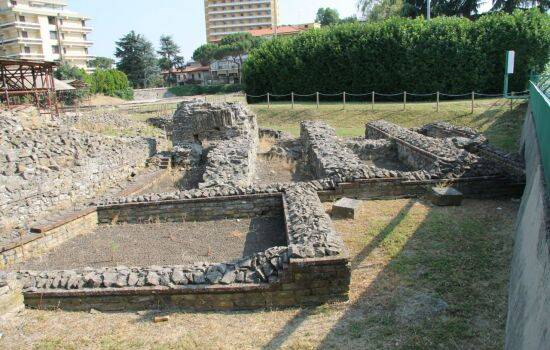
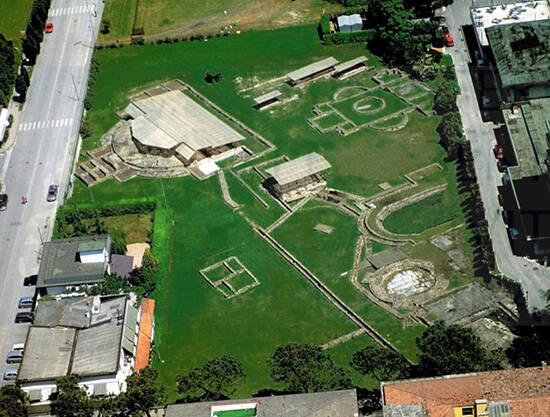
The Archaeological Area of Viale Stazione / Via degli Scavi: This is one of the most significant and visible thermal complexes in Montegrotto. Here, the remains of three large thermal pools have been brought to light, masterfully designed to exploit the hot waters. Even today, it is possible to distinguish the complex water system that fed these basins, testimony to advanced Roman engineering. Next to the pools are the remains of a small theater or odeon, a recreational structure that could seat about a hundred people, where performances, readings, or discussions were likely held. Roman baths, in fact, were not just places of healing, but true social and cultural centers. The discovery of this site dates back to the 18th century, but systematic excavations since the 1960s have allowed these imposing structures to be completely brought to light, enabling a deeper understanding of their architecture and function.
-
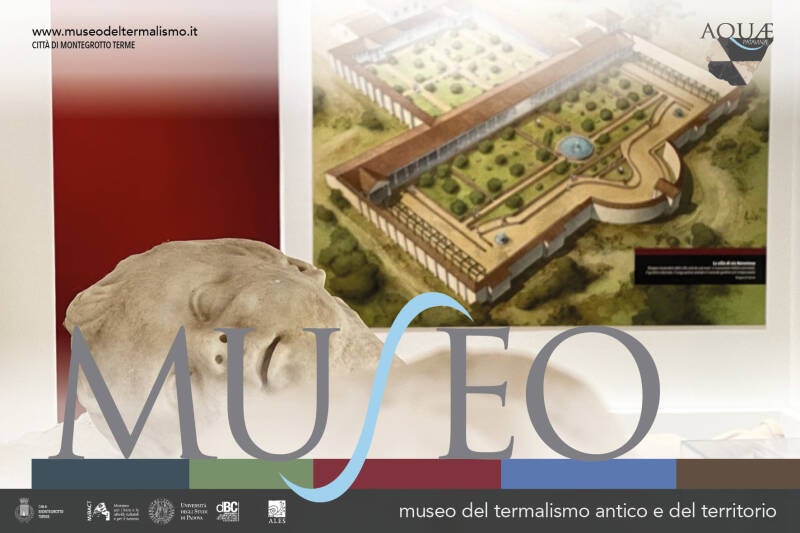
The Archaeological Area of Via Neroniana: Within private property, appropriately preserved and enhanced, are the remains of a luxurious Roman villa. Built in the early 1st century AD and used until the 3rd-4th century AD, this villa was probably the summer or holiday residence of a prominent figure. Its rooms, some of which are still splendidly paved with geometric and figured mosaics, offer a glimpse into the wealthy life of those who frequented the Roman baths. These mosaics, with their colored tiles, tell stories of luxury, art, and daily life, providing precious details about the habits and aesthetic taste of the time.
-
The Thermal Complex under the Hotel Terme Neroniane: One of the most evocative and accessible discoveries is located right under the current Hotel Terme Neroniane. Here, the remains of a thermal complex dating back to the end of the 1st century BC have been brought to light, probably one of the first large thermal facilities in the area. What is striking is a vast apsidal hall, an imposing and scenographic environment, and a complex system of water channeling, which shows Roman hydraulic engineering at work. These finds are also visible through scenographic portholes placed on the floor of the hotel restaurant, allowing guests to dine "above history" and admire these ancient remains up close. Regarding the name "Neroniana" that the pool bears, it has long been pointlessly debated whether it was named so because it was built by Nero or because it was built with stones and marbles imported during Nero's reign; Luciano Lazzaro states that the answer to this problem is to be found in Cassiodorus's letter, where it is understood that it took its name from its builder, a certain Neronius.
In addition to the structures, the mobile finds discovered in these excavations are equally precious: fragments of pottery, coins that give us indications on chronologies, architectural decorations, and even gutter elements like a terracotta "sima" with a female face and lion protomes. The latter, besides being splendid decorative elements, often also had an apotropaic function, designed to ward off evil spirits and protect the building.
The Aquae Patavinae Project and the Enhancement of Heritage
The enhancement of this extraordinary heritage would not have been possible without forward-looking initiatives. The "Aquae Patavinae" project, born in 2005 from the synergy between the University of Padua (in particular the Department of Cultural Heritage), the Archaeological Superintendency of Veneto, and the Municipality of Montegrotto, played a crucial role. This project allowed not only for the continuation of excavations and studies but also for the opening and making accessible of the archaeological areas, equipping them with explanatory panels and equipped paths. "Aquae Patavinae" continues to promote studies, scientific research, and educational activities, offering visitors and schools the opportunity to immerse themselves in the millenary history of Euganean thermalism, making archaeology alive and accessible to all.
A Living Example of Salus Per Aquam: The Past Meeting the Present
The thermal archaeology of Montegrotto Terme is an invaluable treasure that tells a story of well-being, worship, ingenuity, and Roman luxury. Walking among these ancient remains means retracing a journey of over two millennia, discovering how the Latin expression "Salus per Aquam" (health through water) was a tangible and celebrated reality already in antiquity.
Even today, the waters of Montegrotto continue to heal and regenerate, an indissoluble bond between a glorious past and a vibrant present. Archaeology offers us the keys to fully understand this continuity, inviting us to reflect on how man has been able, since the dawn of civilization, to benefit from the resources that nature generously offers. Visiting these sites is not only a cultural act but an experience that unites history, well-being, and a deep sense of connection with the most ancient roots of our territory.
For those who wish to fully live this experience of history and well-being, enjoying modern comforts and the renowned hospitality of the area, structures like Casa Luna offer the ideal stay to explore archaeological wonders and regenerate in the famous thermal waters.
❓ FAQ
What is the most important and visible archaeological site in Montegrotto? The area of Viale Stazione / Via degli Scavi is undoubtedly the most significant. Here you can admire the remains of three large Roman thermal pools and a small theater (odeon). It is a fundamental site for understanding how the Romans organized thermal well-being as a moment of social life and culture.
Are the archaeological areas always accessible to tourists? Some sites, such as the one in Viale Stazione, are fenced but clearly visible from the outside at any time. For in-depth visits inside or to access sites on private property, we recommend checking the "Aquae Patavinae" project calendar or asking for information at the local tourist office during your stay at Casa Luna.
Is it true that you can dine "above" Roman remains in Montegrotto? Yes, at the Hotel Terme Neroniane (located a short distance from Casa Luna) it is possible to admire the remains of an ancient thermal complex from the 1st century BC through spectacular glass portholes placed on the floor of the restaurant room. It is a unique example of how the ancient past is integrated into the modern present of the city.





"Do you want to delve into the history and secrets hidden behind the beauty of our territory? Download our free 10-page guide to plan your bespoke excursions and unlock the exclusive benefits of the Club Casa Luna."
Read our Pillar article: The Charm of Euganean History: Venetian Villas and Villages
Back to: "Culture and surroundings"
Aggiungi commento
Commenti