

If you are looking for a mix of history, sacred art, and local traditions, St. Peter's Cathedral and the Oratory of the Black Madonna in Montegrotto Terme are unmissable.
St. Peter and Eliseus Cathedral
History:
-
Roman Era: Montagnon Hill housed a large building (probably a thermal or residential complex) between the 1st century BC and the 2nd century AD, with structures in Euganean trachyte and a calidarium (thermal bath). During the excavations for the 20th-century cathedral, foundation remains attributed to an imperial palace mentioned by Cassiodorus were found, although this hypothesis is still debated.
-
18th-Century Church: In 1721, a new Baroque church was built (now the Oratory of the Black Madonna) to replace the decaying medieval parish church. It included the bell tower of the previous structure. Consecration: 1777, with Bishop Nicolò Antonio Giustiniani.
-
20th-Century Cathedral: The influx of thermal tourists and population growth made the 18th-century church insufficient. Construction began in 1949 and concluded in 1954, despite the bombings of World War II. Consecration: June 20, 1963, with Bishop Girolamo Bartolomeo Bortignon.
Architecture:
-
Style: Modernized Romanesque-Gothic, with three aisles and polychrome stained glass windows that filter natural light.
-
Materials: Euganean trachyte (typical of the Euganean Hills) and limestone for exteriors and interiors.
-
Designers: Professors Galliano (fresco painter of Villa Bugia in Abano Terme) and Armando Migliolaro, who integrated traditional elements with functional solutions.
Art:
-
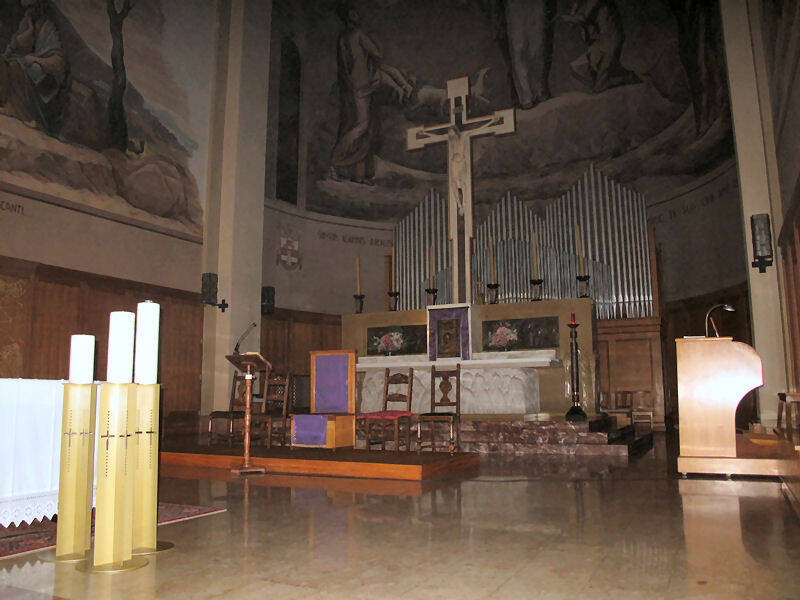
A 17th-century high altar and the wooden statue of the Black Madonna, discovered in 1400 in the Mezzavia area.
-
An altarpiece by Luca Ferrari on the high altar. Frescoes by Armando Migliolaro, High Altar and Crucifix by Luigi Strazzabosco, and copper panels by Alberto Verza.
Curiosities:
The name derives from the Montagnone family, who ruled the area in medieval times. Montagnon Hill:
-
Leveling: To build the cathedral, the hill was leveled thanks to the contribution of the "sampietrini" (inhabitants of Montegrotto).
-
Vineyard: Before the works, the area was covered by a lush vineyard, now replaced by the religious structure.
-
Disappeared Roman Buildings: At the foot of the hill, a circular complex in trachyte (probably connected to Roman baths) was used until the Middle Ages. The interpretation of the alleged imperial palace remains an archaeological mystery.
Black Madonna
Symbols and Traditions:
-
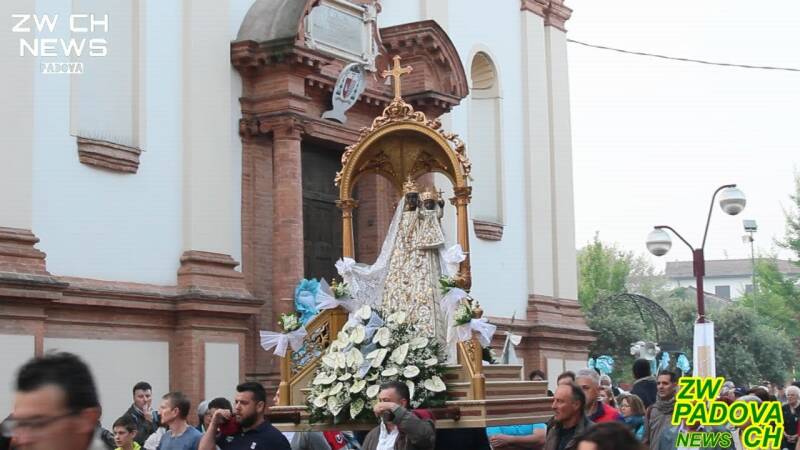
Symbols - The Black Madonna: Despite similarities with the Virgin of Częstochowa, her history is independent and linked to the liberation from the plague. The wooden statue of the Black Madonna was discovered in 1400 in Mezzavia (likely farmland), according to oral tradition. Although some sources indicate 1724 as the date of creation, veneration predates it, linked to a miraculous event. Historical records show that in 1630, during a severe epidemic, the inhabitants organized a votive pilgrimage to the Madonna della Salute in Abano Terme. The end of the plague was attributed to the intercession of the Black Madonna.
-
Tradition - April 25th Procession: Every year on April 25th, the statue is carried in a procession from the Sanctuary of the Madonna della Salute in Abano Terme (Monteortone) to Montegrotto Terme, commemorating a 17th-century pilgrimage that allegedly averted a plague.
-
Ritual: The procession starts from Abano Terme - Monteortone and crosses the streets of Montegrotto, with the participation of the faithful, local authorities, and marching bands. Casa Luna, located near the center, is the ideal base to participate in this secular rite.
-
Symbolism: The Black Madonna is considered the protector of the community, associated with liberation from disease and divine grace.
Conclusion:
After exploring St. Peter's Cathedral, the Black Madonna, and the Euganean Hills, Casa Luna offers an ideal refuge to rest and plan new adventures.
Frequently Asked Questions (FAQ): Visiting the Cathedral of St. Peter and the Black Madonna
-
Is the St. Peter's Cathedral reachable on foot from Casa Luna? Yes, the Cathedral is within walking distance. A pleasant stroll through the center of Montegrotto will allow you to reach the church and admire its imposing structure that overlooks the town.
-
What makes the Black Madonna statue special? The Black Madonna is a symbol of deep devotion for the Montegrotto community. Located in a dedicated chapel, it is a frequent destination for those seeking a moment of reflection and spiritual silence during their thermal stay.
-
Are there recommended times for a visit? The Cathedral is usually open during the day. We recommend visiting in the early morning or late afternoon to enjoy the light filtering through the stained glass windows, creating a peaceful atmosphere perfect to pair with the relaxation at Casa Luna.




"Do you want to delve into the history and secrets hidden behind the beauty of our territory? Download our free 10-page guide to plan your bespoke excursions and unlock the exclusive benefits of the Club Casa Luna."
Read our Pillar article: The Charm of Euganean History: Venetian Villas and Villages
Back to: Culture and Surroundings
Aggiungi commento
Commenti