

Se hai scelto Casa Luna per il tuo soggiorno di benessere a Montegrotto Terme, sai già che ti aspetta un relax profondo tra acque benefiche e la quiete dei Colli Euganei. Ma c'è un mondo di storia, arte e cultura che ti aspetta a un soffio da qui: la magnifica città di Padova. Con la sua vibrante atmosfera universitaria e un patrimonio storico incredibile, Padova è la destinazione perfetta per una gita di un giorno, facilmente raggiungibile in treno o in auto in pochi minuti.
Lasciati alle spalle per qualche ora l'accappatoio e le ciabatte e preparati a esplorare una delle città più affascinanti del Veneto!
Leggi il nostro articolo Pilastro: Città d’Arte in Treno: itinerari strategici da Montegrotto
Torna a: Cultura e dintorni
Un Viaggio tra Arte e Fede: La Basilica di Sant'Antonio
La tua visita non può che iniziare dalla maestosa Basilica di Sant'Antonio, uno dei santuari più venerati al mondo e un capolavoro architettonico che mescola stili romanico, gotico e bizantino. La sua imponente facciata e le sue cupole orientali ti accoglieranno in un'atmosfera di grandezza. All'interno, oltre alla Tomba del Santo, meta di milioni di pellegrini ogni anno, rimarrai colpito dalla ricchezza delle opere d'arte: ammira gli affreschi di Giotto nella Cappella della Madonna Mora e, soprattutto, le sculture bronzee di Donatello sull'altare maggiore, vere pietre miliari del Rinascimento italiano. Prendi il tempo necessario per esplorare i suggestivi chiostri, come il Chiostro del Capitolo e il Chiostro del Noviziato, che offrono angoli di pace e bellezza architettonica. La basilica è un luogo di profonda spiritualità e inestimabile valore artistico.
https://www.santantonio.org/it
L'Universo Stellato di Giotto: La Cappella degli Scrovegni
Preparati a un'emozione indescrivibile. La Cappella degli Scrovegni è un gioiello assoluto, considerato uno dei vertici dell'arte occidentale e riconosciuto Patrimonio UNESCO. Al suo interno, Giotto, con il suo genio rivoluzionario, ha dipinto un ciclo di affreschi che narra la vita di Cristo e della Vergine Maria. I colori vividi, la tridimensionalità pionieristica e l'espressività dei volti e delle figure ti avvolgeranno in un'esperienza visiva e spirituale unica, quasi come entrare in un libro illustrato tridimensionale. Ogni scena è un capolavoro di narrazione. È fondamentale sapere che la visita è contingentata per preservare gli affreschi e avviene solo su prenotazione con orario stabilito; quindi, pianificare in anticipo è indispensabile!
https://www.cappelladegliscrovegni.it/index.php/it/
Il Cuore Pulsante della Città: Prato della Valle
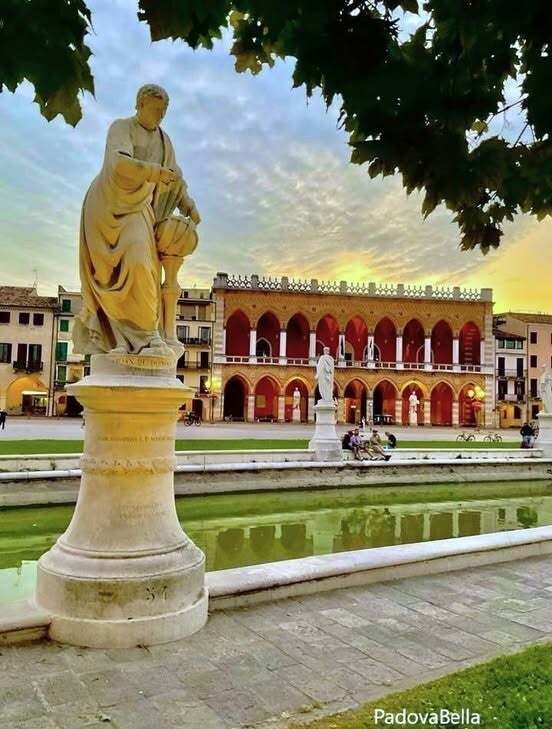
Dopo tanto arte e spiritualità, concediti una passeggiata in Prato della Valle, una delle piazze più grandi d'Europa e un simbolo iconico di Padova. Questa piazza ellittica è un vero e proprio salotto all'aperto, un'isola verde circondata da un canale d'acqua su cui si affacciano ben 78 statue che raffigurano personaggi illustri legati alla storia di Padova, da letterati a scienziati, da artisti a condottieri. È il luogo ideale per una passeggiata rilassante, per fare jogging, per un picnic sull'erba o per godersi il sole su una panchina. Spesso ospita mercatini d'antiquariato, eventi culturali e concerti, animandosi ancora di più. D'estate, la sua vasta estensione e la presenza dell'acqua la rendono un luogo piacevole e rinfrescante.
https://www.comune.padova.it/vivere-il-comune/luoghi/prato-della-valle
Sapere e Bellezza: L'Orto Botanico e l'Università
Non lontano da Prato della Valle si trova l'Orto Botanico di Padova, un'altra gemma riconosciuta come Patrimonio UNESCO e il più antico orto botanico universitario del mondo, fondato nel 1545. Qui potrai passeggiare tra un'incredibile varietà di specie vegetali, alcune rarissime e secolari, provenienti da ogni angolo del pianeta. È un luogo di straordinaria bellezza e importanza scientifica, un vero e proprio laboratorio vivente e un'oasi di pace dove la natura è protagonista.
Prosegui poi verso il cuore pulsante della Università di Padova (Bo), una delle più antiche del mondo, fondata nel 1222. Esplora il suggestivo cortile del Palazzo del Bo, dove si respira secoli di sapere. Non perdere il celebre Teatro Anatomico, la prima struttura permanente per lo studio dell'anatomia (1594), un luogo che testimonia l'importanza di Padova come centro di eccellenza medica. Qui Galileo Galilei insegnò per ben 18 anni, lasciando un'impronta indelebile nella storia della scienza.
I Mercati e le Piazze: Piazza delle Erbe e Piazza della Frutta
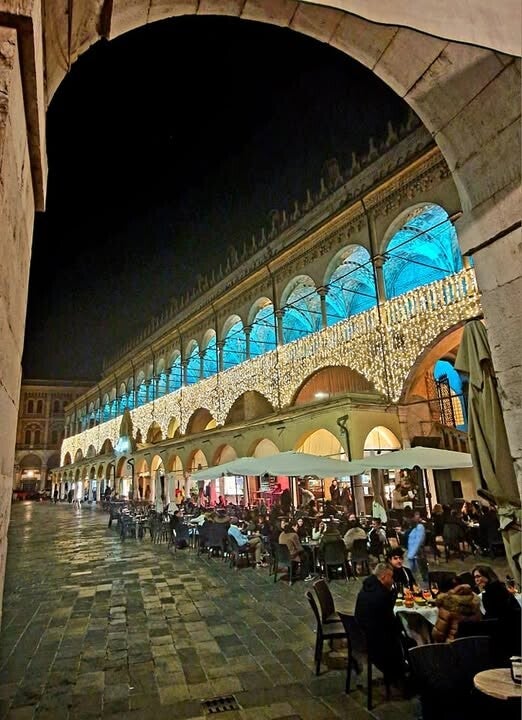
Per un'immersione autentica nella vita quotidiana padovana, non perdere Piazza delle Erbe e Piazza della Frutta. Queste due vivaci piazze gemelle, divise dal grandioso Palazzo della Ragione, sono il cuore commerciale e sociale della città sin dal Medioevo. Ogni giorno, qui pulsa il mercato storico, dove si possono trovare prodotti ortofrutticoli freschissimi, fiori e una vasta gamma di articoli. È un'esplosione di colori, profumi e voci.
Sotto il monumentale Palazzo della Ragione, nel "Salone", scoprirai uno spazio immenso che un tempo ospitava i tribunali e il mercato coperto. Ammira il suo affascinante orologio astrologico e il gigantesco cavallo ligneo, che ti faranno fare un salto indietro nel tempo. Queste piazze sono perfette anche per un caffè o un aperitivo, osservando il via vai della gente.
https://www.comune.padova.it/vivere-il-comune/luoghi/piazza-delle-erbe
Un Sorso di Storia: Lo Storico Caffè Pedrocchi
Concludi la tua giornata con una pausa al Caffè Pedrocchi, un'istituzione padovana e un monumento nazionale. Noto come il caffè "senza porte" perché un tempo era aperto giorno e notte, è stato per secoli il punto di ritrovo di intellettuali, studenti universitari, artisti e patrioti. Ha giocato un ruolo chiave nelle vicende risorgimentali italiane. All'interno, le sue sale in stili diversi (bianca, rossa, nera) ti trasporteranno in epoche passate. Assaggia il suo famoso caffè alla menta, una specialità unica, o goditi un aperitivo immerso nell'atmosfera di un luogo che ha fatto la storia d'Italia.
https://www.caffepedrocchi.it/
Come Raggiungere Padova da Montegrotto Terme
Raggiungere Padova da Casa Luna è estremamente semplice:
-
In Treno: La stazione ferroviaria di Montegrotto Terme è ben collegata con Padova. I treni sono frequenti e il viaggio dura solo pochi minuti. È il modo più comodo e veloce per evitare il traffico e il parcheggio.
-
In Auto: Padova è a breve distanza in auto, ma tieni presente le zone a traffico limitato (ZTL) nel centro storico e la difficoltà di trovare parcheggio. Potrebbe essere utile parcheggiare ai margini della ZTL e proseguire a piedi o con i mezzi pubblici.
Un giorno a Padova è un'esperienza che arricchisce il tuo soggiorno di benessere, offrendoti un perfetto equilibrio tra relax termale e stimoli culturali. Non perdere l'opportunità di scoprire questa perla del Veneto!
Leggi il nostro articolo Pilastro: Città d’Arte in Treno: itinerari strategici da Montegrotto
Torna a: Cultura e dintorni







Beyond the Spas: A Day in Padua
If you have chosen Casa Luna for your wellness stay in Montegrotto Terme, you already know that profound relaxation awaits you amidst beneficial waters and the quiet of the Euganean Hills. But there is a world of history, art, and culture waiting for you just a breath away: the magnificent city of Padua. With its vibrant university atmosphere and incredible historical heritage, Padua is the perfect destination for a day trip, easily accessible by train or car in just a few minutes. Leave your bathrobe and slippers behind for a few hours and get ready to explore one of the most fascinating cities in Veneto!
A Journey through Art and Faith: The Basilica of Saint Anthony
Your visit must begin at the majestic Basilica of Saint Anthony, one of the most venerated shrines in the world and an architectural masterpiece that blends Romanesque, Gothic, and Byzantine styles. Its imposing facade and oriental domes will welcome you into an atmosphere of grandeur. Inside, beyond the Tomb of the Saint—a destination for millions of pilgrims every year—you will be struck by the wealth of artworks: admire the frescoes by Giotto in the Chapel of the Madonna Mora and, above all, the bronze sculptures by Donatello on the high altar, true milestones of the Italian Renaissance. Take the time to explore the suggestive cloisters, such as the Cloister of the Chapter and the Cloister of the Novitiate, which offer corners of peace and architectural beauty. The basilica is a place of profound spirituality and inestimable artistic value.
https://www.santantonio.org/it
Giotto’s Starry Universe: The Scrovegni Chapel
Prepare yourself for an indescribable emotion. The Scrovegni Chapel is an absolute jewel, considered one of the pinnacles of Western art and recognized as a UNESCO World Heritage site. Inside, Giotto, with his revolutionary genius, painted a cycle of frescoes narrating the lives of Christ and the Virgin Mary. The vivid colors, the pioneering three-dimensionality, and the expressiveness of the faces and figures will envelop you in a unique visual and spiritual experience, almost like entering a three-dimensional illustrated book. Every scene is a masterpiece of storytelling. It is essential to know that visits are limited to preserve the frescoes and are by reservation only with a fixed time; therefore, planning ahead is indispensable!
https://www.cappelladegliscrovegni.it/index.php/it/
The Beating Heart of the City: Prato della Valle
After so much art and spirituality, treat yourself to a walk in Prato della Valle, one of the largest squares in Europe and an iconic symbol of Padua. This elliptical square is a true outdoor lounge, a green island surrounded by a water canal lined with 78 statues depicting illustrious figures linked to the history of Padua, from writers to scientists, from artists to leaders. It is the ideal place for a relaxing stroll, jogging, a picnic on the grass, or enjoying the sun on a bench. It often hosts antique markets, cultural events, and concerts, coming even more to life. In summer, its vast extension and the presence of water make it a pleasant and refreshing spot. https://www.comune.padova.it/vivere-il-comune/luoghi/prato-della-valle
Knowledge and Beauty: The Botanical Garden and the University
Not far from Prato della Valle lies the Botanical Garden of Padua, another UNESCO World Heritage gem and the oldest university botanical garden in the world, founded in 1545. Here, you can walk among an incredible variety of plant species, some very rare and centuries-old, from every corner of the planet. It is a place of extraordinary beauty and scientific importance, a true living laboratory and an oasis of peace where nature takes center stage. Then continue toward the heart of the University of Padua (Bo), one of the oldest in the world, founded in 1222. Explore the suggestive courtyard of Palazzo del Bo, where you can breathe in centuries of knowledge. Don't miss the famous Anatomical Theatre, the first permanent structure for the study of anatomy (1594), a place that testifies to Padua's importance as a center of medical excellence. Here, Galileo Galilei taught for 18 years, leaving an indelible mark on the history of science.
https://ortobotanico1545.it/
Markets and Squares: Piazza delle Erbe and Piazza della Frutta
For an authentic immersion into daily Paduan life, do not miss Piazza delle Erbe and Piazza della Frutta. These two lively twin squares, divided by the grand Palazzo della Ragione, have been the commercial and social heart of the city since the Middle Ages. Every day, the historic market pulses here, where you can find very fresh produce, flowers, and a wide range of items. It is an explosion of colors, scents, and voices. Under the monumental Palazzo della Ragione, in the "Salone," you will discover an immense space that once housed the law courts and the covered market. Admire its fascinating astrological clock and the giant wooden horse, which will take you back in time. These squares are also perfect for a coffee or an aperitif while watching the world go by. https://www.comune.padova.it/vivere-il-comune/luoghi/piazza-delle-erbe
A Sip of History: The Historic Caffè Pedrocchi
End your day with a break at Caffè Pedrocchi, a Paduan institution and a national monument. Known as the "doorless" café because it was once open day and night, it was for centuries the meeting point for intellectuals, university students, artists, and patriots. It played a key role in the events of the Italian Risorgimento. Inside, its rooms in different styles (white, red, black) will transport you to past eras. Taste its famous mint coffee, a unique specialty, or enjoy an aperitif immersed in the atmosphere of a place that made Italian history.
https://www.caffepedrocchi.it/
How to Reach Padua from Montegrotto Terme
Reaching Padua from Casa Luna is extremely simple:
-
By Train: The Montegrotto Terme railway station is well-connected to Padua. Trains are frequent, and the journey takes only a few minutes. It is the most convenient and fastest way to avoid traffic and parking.
-
By Car: Padua is a short drive away, but keep in mind the Limited Traffic Zones (ZTL) in the historical center and the difficulty of finding parking. It might be useful to park on the edge of the ZTL and continue on foot or by public transport.
A day in Padua is an experience that enriches your wellness stay, offering you a perfect balance between thermal relaxation and cultural stimulation. Don't miss the opportunity to discover this pearl of Veneto!
Read all articles published on the Casa Luna Blog
Jenseits der Thermen: Ein Tag in Padua
Wenn Sie sich für Ihren Wellness-Aufenthalt in Montegrotto Terme für das Casa Luna entschieden haben, wissen Sie bereits, dass Sie eine tiefe Entspannung inmitten von wohltuendem Wasser und der Ruhe der Euganeischen Hügel erwartet. Doch nur einen Steinwurf entfernt erwartet Sie eine Welt voller Geschichte, Kunst und Kultur: die prächtige Stadt Padua. Mit ihrer lebendigen Universitätsatmosphäre und ihrem unglaublichen historischen Erbe ist Padua das perfekte Ziel für einen Tagesausflug, das in wenigen Minuten bequem mit dem Zug oder dem Auto erreichbar ist. Lassen Sie Bademantel und Slipper für ein paar Stunden zurück und machen Sie sich bereit, eine der faszinierendsten Städte Venetiens zu erkunden!
Eine Reise zwischen Kunst und Glauben: Die Basilika des Heiligen Antonius
Ihr Besuch muss zwangsläufig an der majestätischen Basilika des Heiligen Antonius beginnen, einem der meistverehrten Heiligtümer der Welt und einem architektonischen Meisterwerk, das romanische, gotische und byzantinische Stile vereint. Ihre imposante Fassade und die orientalischen Kuppeln werden Sie in einer Atmosphäre von Erhabenheit empfangen. Im Inneren werden Sie neben dem Grab des Heiligen, das jedes Jahr Ziel von Millionen Pilgern ist, von der Fülle an Kunstwerken beeindruckt sein: Bewundern Sie die Fresken von Giotto in der Kapelle der Madonna Mora und vor allem die Bronzeskulpturen von Donatello auf dem Hochaltar, wahre Meilensteine der italienischen Renaissance. Nehmen Sie sich die Zeit, die stimmungsvollen Kreuzgänge wie den Kreuzgang des Kapitels und den Kreuzgang des Noviziats zu erkunden, die Ecken der Ruhe und architektonischen Schönheit bieten. Die Basilika ist ein Ort tiefer Spiritualität und unschätzbaren künstlerischen Wertes.
https://www.santantonio.org/it
Giottos Sternenhimmel: Die Scrovegni-Kapelle
Bereiten Sie sich auf eine unbeschreibliche Emotion vor. Die Scrovegni-Kapelle ist ein absolutes Juwel, das als einer der Höhepunkte der westlichen Kunst gilt und zum UNESCO-Weltkulturerbe zählt. Im Inneren hat Giotto mit seinem revolutionären Genie einen Freskenzyklus gemalt, der das Leben Christi und der Jungfrau Maria erzählt. Die lebendigen Farben, die wegweisende Dreidimensionalität und die Ausdruckskraft der Gesichter und Figuren werden Sie in ein einzigartiges visuelles und spirituelles Erlebnis hüllen, fast so, als würden Sie ein dreidimensionales Bilderbuch betreten. Jede Szene ist ein Meisterwerk der Erzählkunst. Es ist wichtig zu wissen, dass der Besuch zum Schutz der Fresken begrenzt ist und nur nach Voranmeldung zu einer festgelegten Zeit erfolgt; eine frühzeitige Planung ist daher unerlässlich!
https://www.cappelladegliscrovegni.it/index.php/it/
Das pulsierende Herz der Stadt: Prato della Valle
Gönnen Sie sich nach so viel Kunst und Spiritualität einen Spaziergang über den Prato della Valle, einen der größten Plätze Europas und ein ikonisches Symbol Paduas. Dieser elliptische Platz ist ein wahres Wohnzimmer im Freien, eine grüne Insel, umgeben von einem Wasserkanal, an dem nicht weniger als 78 Statuen stehen, die berühmte Persönlichkeiten der Stadtgeschichte Paduas darstellen – von Literaten über Wissenschaftler und Künstler bis hin zu Feldherren. Es ist der ideale Ort für einen entspannten Spaziergang, zum Joggen, für ein Picknick im Gras oder um die Sonne auf einer Bank zu genießen. Oft finden hier Antiquitätenmärkte, kulturelle Veranstaltungen und Konzerte statt, was den Platz noch lebendiger macht. Im Sommer machen seine weite Ausdehnung und das Vorhandensein von Wasser ihn zu einem angenehmen und erfrischenden Ort.
https://www.comune.padova.it/vivere-il-comune/luoghi/prato-della-valle
Wissen und Schönheit: Der Botanische Garten und die Universität
Nicht weit vom Prato della Valle entfernt befindet sich der Botanische Garten von Padua, ein weiteres UNESCO-Juwel und der älteste universitäre botanische Garten der Welt, der 1545 gegründet wurde. Hier können Sie zwischen einer unglaublichen Vielfalt an Pflanzenarten spazieren gehen, von denen einige äußerst selten und jahrhundertealt sind und aus allen Ecken des Planeten stammen. Es ist ein Ort von außergewöhnlicher Schönheit und wissenschaftlicher Bedeutung, ein wahres lebendes Labor und eine Oase der Ruhe, in der die Natur die Hauptrolle spielt. Weiter geht es zum Herzen der Universität Padua (Bo), einer der ältesten der Welt, die 1222 gegründet wurde. Erkunden Sie den stimmungsvollen Innenhof des Palazzo del Bo, wo man Jahrhunderte des Wissens atmet. Verpassen Sie nicht das berühmte Anatomische Theater, das erste permanente Bauwerk für das Studium der Anatomie (1594) – ein Ort, der Paduas Bedeutung als medizinisches Exzellenzzentrum bezeugt. Hier lehrte Galileo Galilei 18 Jahre lang und hinterließ unauslöschliche Spuren in der Wissenschaftsgeschichte. https://ortobotanico1545.it/
Märkte und Plätze: Piazza delle Erbe und Piazza della Frutta
Für ein authentisches Eintauchen in das tägliche Leben von Padua dürfen Sie die Piazza delle Erbe und die Piazza della Frutta nicht verpassen. Diese beiden lebhaften Zwillingsplätze, die durch den grandiosen Palazzo della Ragione getrennt sind, bilden seit dem Mittelalter das kommerzielle und soziale Herz der Stadt. Jeden Tag pulsiert hier der historische Markt, auf dem Sie frisches Obst und Gemüse, Blumen und eine breite Palette an Artikeln finden können. Es ist eine Explosion von Farben, Düften und Stimmen. Unter dem monumentalen Palazzo della Ragione, im „Salone“, entdecken Sie einen riesigen Raum, in dem einst die Gerichte und der überdachte Markt untergebracht waren. Bewundern Sie die faszinierende astronomische Uhr und das gigantische hölzerne Pferd, die Sie in der Zeit zurückreisen lassen. Diese Plätze eignen sich auch perfekt für einen Kaffee oder einen Aperitif, während man das Kommen und Gehen der Menschen beobachtet. https://www.comune.padova.it/vivere-il-comune/luoghi/piazza-delle-erbe
Ein Schluck Geschichte: Das historische Caffè Pedrocchi
Schließen Sie Ihren Tag mit einer Pause im Caffè Pedrocchi ab, einer Institution in Padua und einem nationalen Denkmal. Bekannt als das Café „ohne Türen“, da es einst Tag und Nacht geöffnet war, war es jahrhundertelang der Treffpunkt für Intellektuelle, Studenten, Künstler und Patrioten. Es spielte eine Schlüsselrolle in den Ereignissen des italienischen Risorgimento. Im Inneren werden Sie die verschiedenen Säle (weiß, rot, schwarz) in vergangene Epochen versetzen. Probieren Sie den berühmten Minzkaffee, eine einzigartige Spezialität, oder genießen Sie einen Aperitif inmitten der Atmosphäre eines Ortes, der italienische Geschichte geschrieben hat. https://www.caffepedrocchi.it/
Wie Sie Padua von Montegrotto Terme aus erreichen
Padua von Casa Luna aus zu erreichen, ist extrem einfach:
-
Mit dem Zug: Der Bahnhof von Montegrotto Terme ist bestens mit Padua verbunden. Die Züge fahren häufig und die Fahrt dauert nur wenige Minuten. Es ist der bequemste und schnellste Weg, um Verkehr und Parkplatzsorgen zu vermeiden.
-
Mit dem Auto: Padua ist nur eine kurze Autofahrt entfernt, aber beachten Sie die verkehrsberuhigten Zonen (ZTL) im historischen Zentrum und die Schwierigkeit, einen Parkplatz zu finden. Es könnte sinnvoll sein, am Rande der ZTL zu parken und zu Fuß oder mit öffentlichen Verkehrsmitteln weiterzufahren.
Ein Tag in Padua ist eine Erfahrung, die Ihren Wellness-Aufenthalt bereichert und Ihnen ein perfektes Gleichgewicht zwischen thermaler Entspannung und kulturellen Impulsen bietet. Verpassen Sie nicht die Gelegenheit, diese Perle Venetiens zu entdecken!
Lesen Sie alle Artikel im Casa Luna Blog
Au-delà des Thermes : Une Journée à Padoue
Si vous avez choisi Casa Luna pour votre séjour de bien-être à Montegrotto Terme, vous savez déjà qu'un moment de détente profonde vous attend entre les eaux bénéfiques et le calme des Monts Euganéens. Mais il y a tout un monde d'histoire, d'art et de culture qui vous attend à deux pas d'ici : la magnifique ville de Padoue. Avec son atmosphère universitaire vibrante et son patrimoine historique incroyable, Padoue est la destination parfaite pour une excursion d'une journée, facilement accessible en train ou en voiture en quelques minutes seulement. Laissez derrière vous pour quelques heures votre peignoir et vos claquettes et préparez-vous à explorer l'une des villes les plus fascinantes de Vénétie !
Un Voyage entre Art et Foi : La Basilique de Saint-Antoine
Votre visite ne peut que commencer par la majestueuse Basilique de Saint-Antoine, l'un des sanctuaires les plus vénérés au monde et un chef-d'œuvre architectural mêlant les styles roman, gothique et byzantin. Son imposante façade et ses coupoles orientales vous accueilleront dans une atmosphère de grandeur. À l'intérieur, au-delà du tombeau du Saint, destination de millions de pèlerins chaque année, vous serez frappé par la richesse des œuvres d'art : admirez les fresques de Giotto dans la chapelle de la Madone Maure et, surtout, les sculptures en bronze de Donatello sur le maître-autel, véritables jalons de la Renaissance italienne. Prenez le temps nécessaire pour explorer les cloîtres suggestifs, comme le cloître du Chapitre et le cloître du Noviciat, qui offrent des coins de paix et de beauté architecturale. La basilique est un lieu de profonde spiritualité et d'une valeur artistique inestimable.
https://www.santantonio.org/it
L'Univers Étoilé de Giotto : La Chapelle des Scrovegni
Préparez-vous à une émotion indescriptible. La Chapelle des Scrovegni est un bijou absolu, considéré comme l'un des sommets de l'art occidental et reconnu au patrimoine mondial de l'UNESCO. À l'intérieur, Giotto, avec son génie révolutionnaire, a peint un cycle de fresques narrant la vie du Christ et de la Vierge Marie. Les couleurs vives, la tridimensionnalité pionnière et l'expressivité des visages et des figures vous envelopperont dans une expérience visuelle et spirituelle unique, presque comme si vous entriez dans un livre illustré en trois dimensions. Chaque scène est un chef-d'œuvre de narration. Il est fondamental de savoir que la visite est contingentée pour préserver les fresques et se fait uniquement sur réservation avec un horaire fixe ; il est donc indispensable de planifier à l'avance ! https://www.cappelladegliscrovegni.it/index.php/it/
Le Cœur Battant de la Ville : Prato della Valle
Après tant d'art et de spiritualité, accordez-vous une promenade sur le Prato della Valle, l'une des plus grandes places d'Europe et un symbole emblématique de Padoue. Cette place elliptique est un véritable salon à ciel ouvert, une île verte entourée d'un canal d'eau sur lequel donnent pas moins de 78 statues représentant des personnages illustres liés à l'histoire de Padoue, des écrivains aux scientifiques, des artistes aux chefs de guerre. C'est l'endroit idéal pour une promenade relaxante, pour faire du jogging, pour un pique-nique sur l'herbe ou pour profiter du soleil sur un banc. Elle accueille souvent des marchés d'antiquités, des événements culturels et des concerts, s'animant encore plus. En été, sa vaste étendue et la présence de l'eau en font un lieu agréable et rafraîchissant. https://www.comune.padova.it/vivere-il-comune/luoghi/prato-della-valle
Savoir et Beauté : Le Jardin Botanique et l'Université
Non loin du Prato della Valle se trouve le Jardin Botanique de Padoue, un autre joyau reconnu par l'UNESCO et le plus ancien jardin botanique universitaire au monde, fondé en 1545. Ici, vous pourrez flâner parmi une incroyable variété d'espèces végétales, certaines rarissimes et séculaires, provenant de tous les coins de la planète. C'est un lieu d'une beauté extraordinaire et d'une importance scientifique majeure, un véritable laboratoire vivant et une oasis de paix où la nature est reine. Poursuivez ensuite vers le cœur battant de l'Université de Padoue (Bo), l'une des plus anciennes au monde, fondée en 1222. Explorez la cour suggestive du Palazzo del Bo, où l'on respire des siècles de savoir. Ne manquez pas le célèbre Théâtre Anatomique, la première structure permanente pour l'étude de l'anatomie (1594), un lieu qui témoigne de l'importance de Padoue comme centre d'excellence médicale. C'est ici que Galilée a enseigné pendant 18 ans, laissant une empreinte indélébile dans l'histoire de la science.
https://ortobotanico1545.it/
Les Marchés et les Places : Piazza delle Erbe et Piazza della Frutta
Pour une immersion authentique dans la vie quotidienne padouane, ne manquez pas la Piazza delle Erbe et la Piazza della Frutta. Ces deux places jumelles animées, séparées par le grandiose Palazzo della Ragione, sont le cœur commercial et social de la ville depuis le Moyen Âge. Chaque jour, le marché historique y palpite, proposant des produits frais, des fleurs et une vaste gamme d'articles. C'est une explosion de couleurs, de parfums et de voix. Sous le monumental Palazzo della Ragione, dans le "Salone", vous découvrirez un espace immense qui abritait autrefois les tribunaux et le marché couvert. Admirez sa fascinante horloge astrologique et le gigantesque cheval en bois, qui vous feront faire un saut dans le temps. Ces places sont aussi parfaites pour un café ou un apéritif en observant le va-et-vient des gens.
https://www.comune.padova.it/vivere-il-comune/luoghi/piazza-delle-erbe
Une Gorgée d'Histoire : Le Café Historique Pedrocchi
Concluez votre journée par une pause au Café Pedrocchi, une institution padouane et un monument national. Connu comme le café "sans portes" car il était autrefois ouvert jour et nuit, il a été pendant des siècles le point de ralliement des intellectuels, des étudiants universitaires, des artistes et des patriotes. Il a joué un rôle clé dans les événements du Risorgimento italien. À l'intérieur, ses salles aux styles différents (blanche, rouge, noire) vous transporteront dans les époques passées. Goûtez son célèbre café à la menthe, une spécialité unique, ou savourez un apéritif imprégné de l'atmosphère d'un lieu qui a fait l'histoire de l'Italie. https://www.caffepedrocchi.it/
Comment Se Rendre à Padoue depuis Montegrotto Terme
Se rendre à Padoue depuis Casa Luna est extrêmement simple :
-
En Train : La gare de Montegrotto Terme è bien reliée à Padoue. Les trains sont fréquents et le trajet ne dure que quelques minutes. C'est le moyen le plus pratique et le plus rapide pour éviter le trafic et le stationnement.
-
En Voiture : Padoue est à une courte distance en voiture, mais gardez à l'esprit les zones à trafic limité (ZTL) dans le centre historique et la difficulté de trouver une place de parking. Il peut être utile de se garer en bordure de la ZTL et de continuer à pied ou en transports en commun.
Une journée à Padoue est une expérience qui enrichit votre séjour de bien-être, vous offrant un équilibre parfait entre détente thermale et stimulations culturelles. Ne manquez pas l'opportunité de découvrir cette perle de la Vénétie !
Lisez tous les articles du blog de Casa Luna