

Villa Selvatico: A Historical Gem in Battaglia Terme
Villa Selvatico, located in Battaglia Terme, is one of the most fascinating Venetian villas, rich in history, art, and architectural beauty. This villa represents an important example of Venetian architecture and a place of great cultural and tourist interest.
History of Villa Selvatico
Origins and Construction Historical Context
In medieval times, the estate belonged to the Carraresi and Dalesmanini families; it was then purchased in the second half of the sixteenth century by Luigi Selvatico, archdeacon of the cathedral of Padua, and in 1596, the first Mass was celebrated in the reconstructed Oratory of the Hospice of S. Eliseo. The hill and estate then passed to Marquis Bartolomeo Selvatico, who began the construction of the villa in 1593, completed in 1647 by the illustrious physician Benedetto Selvatico. The construction of Villa Selvatico took place during a period of great development for the Venetian nobility, during the 18th century. This period, known as the "Age of Enlightenment," saw a flowering of Enlightenment ideas and a renewed interest in art, culture, and science. Noble families, such as the Selvatico, sought to reflect their social status through the construction of elegant and functional residences.
Commission of the Villa
The villa was commissioned by the Selvatico family, one of the most influential noble families in the area, who had historical ties to the city of Padua. The choice to build a villa in Battaglia Terme, a location known for its thermal springs and natural landscape, was strategic to enjoy a healthy and relaxing environment.
Design and Architect
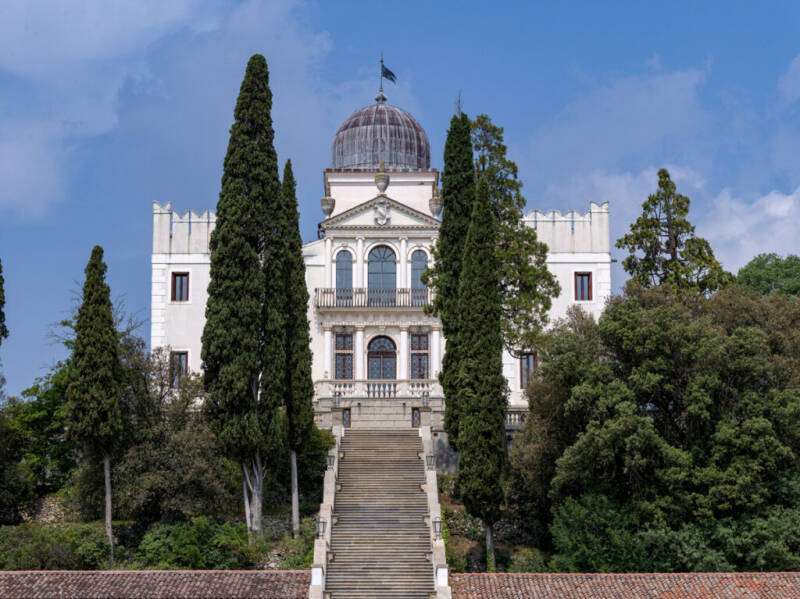
The architect in charge of designing the villa was Francesco Muttoni, an important exponent of 18th-century Venetian architecture. Muttoni was known for his neoclassical style, characterized by the use of classical elements such as columns, architraves, and symmetry. His work is distinguished by the harmony between the building and the surrounding landscape, a fundamental aspect for the Venetian villas of the era.
Construction
The construction of the villa involved the use of local materials, such as stone and terracotta, to ensure perfect integration with the surrounding environment. The hill where the Villa stands is made of volcanic rock. Inside, there is a gallery that offers a short walk through the geology of the Euganean Hills. The villa was designed to be a summer residence, with large internal spaces and well-kept gardens, ideal for hosting social and cultural events.
Structure and Design
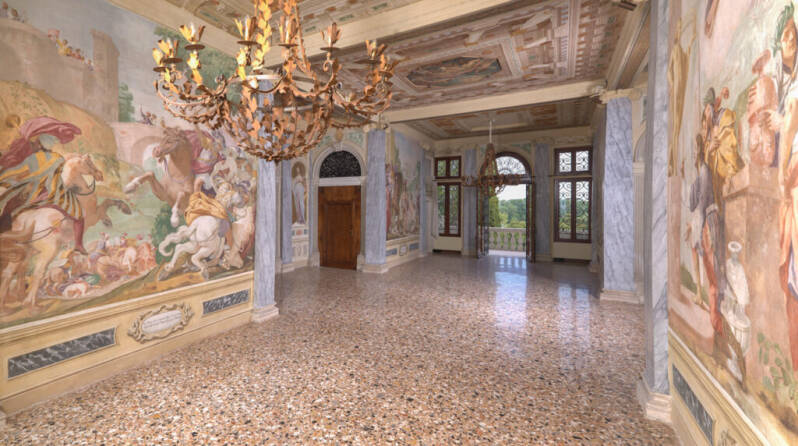
The villa features a rectangular layout with a central body and two side wings, creating perfect symmetry. The facade is characterized by a portico with Doric columns, giving a majestic appearance to the entrance. The interiors are spacious and bright, with rooms decorated with frescoes and stuccos reflecting the taste of the period. The layout of the internal spaces was designed to favor conviviality and hospitality, with salons and reception rooms overlooking the gardens.
Function and Use
Originally, Villa Selvatico served as a summer residence for the family, a place of leisure and relaxation immersed in nature. The Villa was not only a private residence but also a meeting place for the nobility and intellectuals of the time. Over the years, the villa has continued to host cultural events, parties, and noble gatherings, becoming in recent years a center of social and cultural life.
Decline and Restoration
Over time, the villa underwent a period of abandonment and decay, but in recent decades it has been the subject of significant restoration work to preserve its beauty and history. Today, Villa Selvatico is open to the public and is used for events, weddings, and guided tours.
Architecture of Villa Selvatico
Architectural Style The villa features an elegant neoclassical style, with a symmetrical facade and refined decorations. The use of local materials, such as terracotta and stone, gives the villa a harmonious appearance integrated with the landscape. The four facades are enriched by double pediments with overlapping Doric and Ionic orders, crowned by tympanums; on the east side, facing the Battaglia canal, there is a monumental staircase that allowed direct access to the villa for those arriving by boat from Padua and Venice.
Interiors and Decorations The interiors of the villa are decorated with frescoes and stuccos reflecting the taste of the era. The rooms are spacious and bright, with high ceilings and elaborate decorations. Among the most significant rooms is the main hall, decorated with frescoes representing mythological and allegorical scenes, typical of the Baroque period. These paintings illustrate the Stories of Antenore, the mythical founder of Padua, such as the “Flight of Antenore from Troy,” and the “Victory of Antenore over Valesio.” The frescoes are by Luca Ferrari from Reggio and Alessandro Varotari, known as Padovanino (1588-1648).
Gardens and Park At the beginning of the 19th century, the Paduan architect Giuseppe Jappelli was commissioned to convert the Italian garden into a romantic park, according to the “English” fashion. Jappelli reorganized without completely overturning the previous Baroque garden; using the water from the three thermal ponds, he built fishponds and groves. Villa Selvatico is surrounded today by a large park that integrates with the surrounding natural landscape. The gardens are characterized by paths, fountains, and flower beds, creating an environment of tranquility and beauty. The park is an ideal place for walks and outdoor activities, offering suggestive views of the Euganean Hills.
Activities and Events
Guided Tours Villa Selvatico offers guided tours for groups and schools, allowing visitors to discover the history and architecture of the villa. Tours are led by expert guides who share anecdotes and curiosities about the villa and the Selvatico family.
Cultural Events The villa hosts cultural events, concerts, and art exhibitions, becoming a reference point for the cultural life of Battaglia Terme. These events are an opportunity to appreciate the beauty of the villa and to participate in moments of socialization and culture.
Weddings and Ceremonies Villa Selvatico is an ideal location for weddings and ceremonies, thanks to its beauty and historical charm. The internal and external spaces can be set up to host events of various types, offering a romantic and suggestive atmosphere.
Access and Useful Information
How to Reach Villa Selvatico:
The villa is easily accessible by car, located a few kilometers from the center of Battaglia Terme. It is advisable to follow the signs for the city center and then for the villa. Parking is available for visitors.
Contacts
Address: Villa Selvatico, Via Roma, 1, 35041 Battaglia Terme (PD) https://www.villaselvaticoterme.it/
Telephone: 049 1234567 (example)
Conclusions:
Casa Luna, located nearby, offers a warm and comfortable welcome, ideal for visitors wishing to explore the area. Both structures, Villa Selvatico and Casa Luna, complement each other, offering an opportunity to immerse oneself in local history and culture.
FAQ:
-
What are the visiting hours for Villa Selvatico? It is recommended to check the official website https://www.villaselvaticoterme.it/ for updated hours and bookings.
-
Who designed Villa Selvatico? Architect Francesco Muttoni for the villa and Giuseppe Jappelli for the romantic park.
-
Where is Villa Selvatico located? It is located in Battaglia Terme, Via Roma 1, a few minutes from Casa Luna in Montegrotto Terme.
-
What is there to see inside the villa? The splendid frescoes by Luca Ferrari and Padovanino narrating the stories of Antenore.





"Do you want to delve into the history and secrets hidden behind the beauty of our territory? Download our free 10-page guide to plan your bespoke excursions and unlock the exclusive benefits of the Club Casa Luna."
Read our Pillar article: The Charm of Euganean History: Venetian Villas and Villages
Back to: Culture and surroundings
Aggiungi commento
Commenti