

Before the Romans: Sacred Cults and Mysterious Origins of the Euganean Thermal Baths
When walking through the streets of Montegrotto and Abano Terme today—surrounded by modern hotels, state-of-the-art pools, and certified wellness centers—it is hard to imagine that three thousand years ago, directly beneath our feet, laid a primordial, wild landscape steeped in deep spirituality.
Long before the Romans monumentalized the springs with grand marble basins, aqueducts, and theaters, our land was already the beating heart of wellness in Northern Italy, lived in and venerated by the Ancient Venetians (or Paleovenetians).
A Primordial Landscape of Steam and Forests
In the 1st millennium BC (during the Iron Age), the Euganean basin had no roads or buildings. It was a dense alternation of oak forests and clearings where the earth literally "breathed." Powerful springs of boiling and cold water continuously bubbled up from underground, perpetually enveloped in warm, sulfurous mists.
For the ancient inhabitants, this mysterious phenomenon was not merely geology: it was a direct manifestation of the divine. Although the famous name of the god Aponus would only emerge later with the arrival of the Romans (who inherited this sacredness, giving it a formal name and building the Fons Aponi), centuries earlier the Paleovenetians already considered these therapeutic waters living, sacred entities to which they entrusted their health.
The Sanctuary of the Votive Lake in Montegrotto
The hub of this spiritual and medical activity was located right in Montegrotto Terme, in the natural basin enclosed between Mount Castello and San Pietro Montagnon Hill (where the Cathedral stands today). A large natural Sacred Lake of about two square kilometers stretched across this area, with thermal springs bubbling up from its center at temperatures exceeding 80°C (176°F).
For the Paleovenetians, this steaming basin was an open-air Sanctuary. The muddy shores were considered blessed ground. Pilgrims traveled from all over the region to immerse themselves and gather the warm, mineral-rich muds (the protohistoric ancestors of our mud therapy), experiencing every healing as a divine miracle.
Over the centuries and through subsequent land reclamation, the lake completely disappeared. However, its secrets remained preserved in the mud until the late 19th century, when archaeological excavations revealed thousands of artifacts thrown into the boiling waters by worshippers as ritual offerings.
Goddess Reitia: The Ancient Mother of Healing
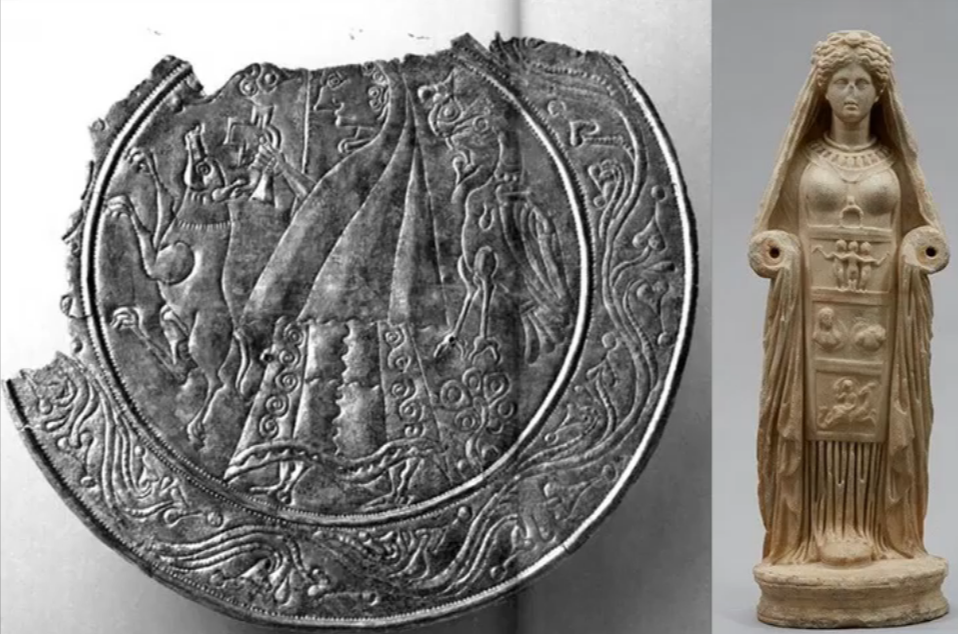
Who ruled over these miraculous waters before the Romans? The great guardian of the protohistoric Euganean Spas was Reitia, the Great Mother Goddess of the Ancient Venetians.
Reitia was the absolute ruler of untouched nature, fertility, and destiny, but above all, she was worshipped as the Healing Goddess. The Paleovenetians believed that the thermal waters and warm muds were a direct extension of Reitia's divine power, capable of relieving human suffering and purifying the spirit.
To express gratitude for restored health or to ask for a favor, pilgrims entrusted small masterpieces of bronze and terracotta craftsmanship to the sacred lake:
-
Bronze Horse Figurines: The horse (Ippos) was the most sacred animal to the Paleovenetians, symbolizing nobility, strength, and prestige. Splendid bronze figurines depicting horses and riders were recovered from the waters of Montegrotto, offered to invoke the Goddess's protection over livestock and animal health.
-
Anatomical Ex-Votos: Figurines and bronze plaques representing diseased body parts—such as legs, arms, or feet—healed through thermal water and mud treatments.
-
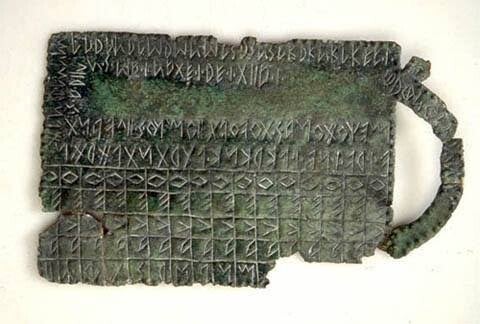
Inscribed Plaques and the Sacred Alphabet: Reitia was also the patroness of writing. Worshippers used a stylus to engrave their prayers and ritual alphabets onto thin bronze sheets before throwing them into the lake. Writing itself was considered a magical act of devotion.
-
Ritual Cups and Goblets: Ceramic cups were used to draw and drink the thermal water directly at the source, then broken and thrown into the mud as a seal of the covenant with the deity.
Lake Costa: The UNESCO Treasure Born from Warm Water
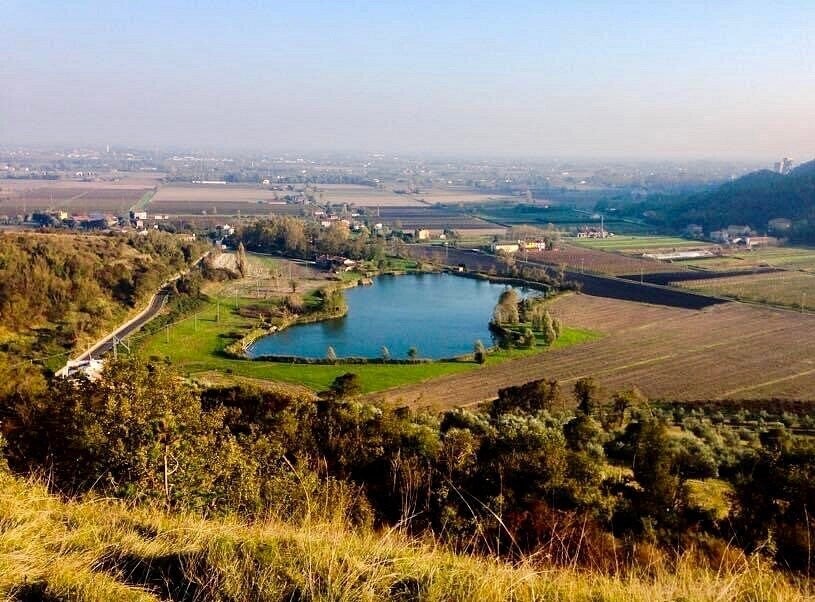
Euganean thermalism traces its roots even deeper into time, reaching into deep prehistory. Just a 20-minute drive from Montegrotto Terme, at the foot of the medieval village of Arquà Petrarca, lies Lake Costa (Laghetto della Costa).
This small body of water is a site of global significance: since 2011, it has been recognized as a UNESCO World Heritage Site. Right here, around 2200 BC (during the Bronze Age), a prehistoric community chose to build a pile-dwelling (stilt house) village. The reason? This lake is also fed by underground thermal springs that made it steam during winter, releasing heat and creating a mild microclimate.
The peaty mud of the lake preserved bone artifacts, ceramics, flint weapons, and even cultivated seeds for millennia, proving that the visceral connection between humans, therapeutic mud, and the warm waters of the Euganean Hills began four thousand years ago.
💡 An Incredible Historical Curiosity: Did you know that this small lake remained miraculously immune to the greatest climatic cataclysms in Venetian history? In 589 AD, when the legendary and devastating flood known as the "Rotta della Cucca" caused the Adige River to overflow, submerging the entire plain in mud and altering its hydrography, Lake Costa remained untouched. Protected by the natural barrier of the Euganean Hills and fed solely by underground thermal springs, its waters were preserved. It was precisely this exceptional geological stability that allowed the mud to perfectly preserve the pile-dwelling remains up to the present day!
🗺️ Where to Experience This History During Your Stay
For guests wishing to immerse themselves in Paleovenetian history during their holiday at Casa Luna, these extraordinary artifacts can be visited nearby:
-
National Atestino Museum in Este (20 km away): Houses one of the world's most extraordinary collections of pre-Roman and Paleovenetian archaeology, including bronze figurines, decorated situlae (vessels), and plaques dedicated to Goddess Reitia.
-
Eremitani Civic Museums in Padua (10-minute train ride from Montegrotto): The archaeological section displays many of the bronze horse and votive figurines retrieved from the muds of Montegrotto Terme.
-
Archaeological Park and Lake Costa in Arquà Petrarca: Ideal for a scenic and historic walk through a UNESCO World Heritage site.
A Millennia-Old Legacy Renewed at Casa Luna
Staying in Montegrotto Terme today—perhaps enjoying a relaxing break at Casa Luna—means reconnecting with this ancient thread.
The thermal water and mud that heal the body and relax the mind today are not a modern invention, but a wellness and regeneration ritual that has been repeated, identical in spirit, for over three thousand years in the exact same location.
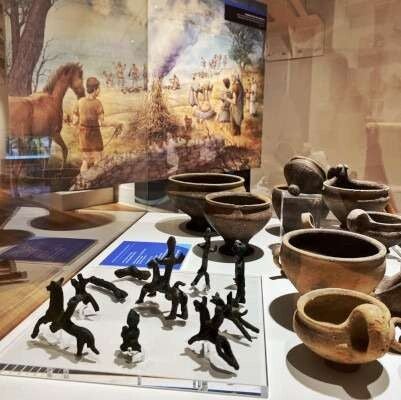
Bronze artifacts recovered from the thermal muds of Montegrotto, now preserved in local museums.
The picturesque thermal sheet of water of Lake Costa in Arquà Petrarca, home to an ancient Bronze Age pile-dwelling village now recognized as a UNESCO World Heritage site.
Ancient bronze plaques engraved with ritual alphabets and sacred dedications, offered to the deity of thermal waters as a supreme act of devotion.
Representation of Goddess Reitia, the Great Healing Mother worshipped by the Ancient Venetians as the guardian of health, nature, and the Euganean hot springs.
❓ Frequently Asked Questions (FAQ)
Who inhabited the Euganean Hills before the Romans arrived?
The Euganean Hills were inhabited by the Paleovenetians (or Ancient Venetians), an Iron Age civilization renowned for its refined culture, horse breeding, bronze craftsmanship, and deep devotion to thermal springs.
What did thermal water mean to the Paleovenetians?
Thermal water was not considered a simple physical resource, but a sacred and divine element—a direct manifestation of Goddess Reitia, protector of health, fertility, and healing.
What artifacts prove the existence of the Votive Lake Sanctuary in Montegrotto?
Excavations uncovered hundreds of bronze votive figurines of horses and worshippers, anatomical ex-votos, ritual drinking cups, and bronze plaques inscribed with dedications to Reitia.
What is Lake Costa in Arquà Petrarca and why is it a UNESCO site?
It is a small thermal lake where a Bronze Age pile-dwelling village existed in 2200 BC. The peaty mud preserved prehistoric artifacts in pristine condition for over four thousand years.
"Do you want to delve into the science behind your rebirth? Download our 10-page guide and unlock the exclusive benefits of the Club Casa Luna."
Read the Pillar article: "Beyond Relaxation: Holistic Rituals and Philosophy of Well-being"
Back to the category: "Well-being and Spas"
Aggiungi commento
Commenti