

The Euganean Thermal Baths in the Middle Ages Part 4: From crisis to rebirth.
After the end of the Roman Empire, Abano and Montegrotto experienced some of the most difficult centuries of their history. The large thermal structures were progressively abandoned, the landscape changed, and floods contributed to making some areas more humid and difficult to inhabit.
However, the thermal springs did not disappear. Between the 7th and 13th centuries, the territory slowly became inhabited, cultivated, and organized once again. Monasteries, small settlements, and new communities helped prepare that rebirth of the Euganean Thermal Baths which, in the following centuries, would lead to the development of a new culture of water care and study.
After Rome: A Transformed Territory
Between the 6th and 7th centuries, the system built by the Romans entered a progressive crisis. The major hydraulic works and thermal facilities were no longer maintained as before, and floods altered the landscape.
The famous Rotta della Cucca of 589, together with other flood events, contributed to the transformation of the Venetian plain's territory. The waters dispersed in some areas, favoring the formation of humid and marshy environments. The hot springs, however, continued to gush forth. What changed above all was the way the territory was inhabited and used.
For a few centuries, written sources are scarce and do not allow for the reconstruction of a continuous history of the thermal baths. However, archaeological excavations reveal a more interesting reality than that of a completely abandoned territory. In Montegrotto, in the area of Via Neroniana, archaeological research documented a new settlement between the 9th and 11th centuries, after a phase in which the area had been used mainly for agriculture.
Water Changes Meaning
In ancient times, the springs of Abano and Montegrotto were also linked to water cults and the figure of Aponus. With the spread of Christianity, this ancient interpretation was progressively overcome.
Thermal water could now be considered a gift of Providence and a resource capable of alleviating suffering. Body care thus entered a new cultural framework, in which assistance to the sick and hospitality to travelers assumed growing importance.
However, we do not have sufficient documents to state that in the Early Middle Ages there were already organized thermal structures in Montegrotto or Abano according to this model. It is more correct to speak of a progressive transformation of the meaning of the waters and the territory.
The Benedictines and the Rebirth of the Territory
Between the 11th and 12th centuries, an important element of stability arrived: the presence of Benedictine communities.
On the hill of San Daniele, above Abano, the Benedictines of Santa Giustina developed a settlement whose original layout dates back to around the 11th century. On the opposite side of the Euganean Hills, the Abbey of Praglia also arose, founded according to tradition in 1080.
Monasteries were not only places of prayer. They were also centers of agricultural organization, land management, and assistance.
It is important, however, not to automatically attribute all land reclamation works in the Euganean territory to the monks. Some local traditions directly link the
Benedictines to the transformation of the marshy areas around the thermal baths, but documentary evidence is not sufficient to establish a direct relationship.
Instead, the ability of monastic communities to intervene on the landscape and govern waters is well documented in other territories of the Padua area.
A Small House Tells the Medieval Life of Montegrotto
One of the most interesting testimonies of this period is found right in Montegrotto.
In the excavations of Via Neroniana, above the remains of the previous Roman complex, archaeologists identified a wooden hut datable to the 12th–13th centuries.
The structure, reconstructed with dimensions of about 9 × 3.8 meters, was supported by posts and had a fireplace. The ground had been raised using silt and fragments of bricks, while two ditches helped regulate the waters.
It is a simple but precious testimony: it concretely shows how, centuries after the great Roman season, someone had returned to live in this place and had to adapt to an environment still characterized by the presence of water.
The excavations also yielded numerous plant remains that help reconstruct the daily life of the inhabitants. There were mainly cereals and legumes, along with wild fruits and other plants used in diet and probably in domestic life.
Behind that small hut, we can therefore glimpse a community that no longer lived in the monumental environment of the Roman baths, but had begun to build its own life anew in the territory.
From Monastic Presence to the Rebirth of the Thermal Baths
In the 12th century, Abano and the surrounding territory entered a new phase.
Sources gradually became richer, and historical syntheses indicate the reconstruction and expansion of the thermal facilities when Abano achieved greater autonomy and stability. However, this was not a sudden return to Roman greatness.
The rebirth was gradual and took place through many small changes: the territory became inhabited again, lands were used anew, new settlements consolidated, and the springs were once again considered an important resource.
The relationship between thermal baths and care also began to transform. The medieval world had developed a new attention toward assistance to the sick and hospitality, while in the following centuries it would be above all doctors and scholars who would systematically study the properties of the waters.
It is significant that precisely in the following centuries the tradition linking the name Montegrotto to the Latin expression Mons Aegrotorum ("mount of the sick"), recorded in the 15th century by the physician Michele Savonarola, emerged. However, this is a traditional, unproven etymology.
From Medieval Rebirth to Paduan Medicine
At the end of the 13th century, the landscape of the Euganean Thermal Baths was by now very different from that following the crisis of the Roman era.
The large monumental structures of antiquity were gone, but the territory was alive once again. Communities, agriculture, monasteries, communication routes, and settlements had reconstructed a stable human presence around the springs.
A new season of thermal history was thus prepared.
In the following centuries, attention would progressively shift from monasteries to doctors and scholars. Abano and Montegrotto would become the object of scientific observation and study, especially thanks to the proximity of the University of Padua and figures such as Pietro d'Abano.
The history of the Euganean Thermal Baths was about to enter a new phase: one in which water would not only be a resource of the territory, but also an object of medical and scientific study.
The Middle Ages Near Casa Luna
Today, staying at Casa Luna, it is possible to encounter some of the testimonies of this long transformation.
The hill of San Daniele, above Abano, preserves the memory of the Benedictine presence. The Abbey of Praglia, in Teolo, represents one of the most important testimonies of the monastic tradition of the Euganean Hills. In Montegrotto, on the other hand, the archaeological area of Via Neroniana allows visitors to get close to the concrete traces of medieval daily life.
These are places that help read the landscape with different eyes.
Behind the thermal baths, the hotels, the streets, and the territory we know today, there is a much longer history: a history made of waters, floods, agriculture, monasteries, small settlements, and, slowly, a new rebirth.
In the next chapter of our story, doctors and scholars will arrive. With Pietro d'Abano and the University of Padua, the Euganean waters will finally enter the great history of medicine and science.
To Learn More
For those wishing to learn more about the medieval history of the Euganean Thermal Baths and the archaeological evidence of the territory, we suggest some resources and publications:
-
-
The archaeological area of Via Neroniana – Archaeological Superintendency – The medieval archaeological testimonies of Montegrotto Terme
-
Abbey of Praglia – Historical notes – The origins and development of the Benedictine presence in the Euganean Hills.
-
Monastery of San Daniele – The history of one of the oldest monastic settlements in the Euganean territory
-
Aquae Patavinae Project – University of Padua – Archaeological research and historical reconstruction of the thermal landscape.
-
The archaeological area of Via Neroniana in Montegrotto Terme – Scientific publication dedicated to the excavations and history of the site.
-
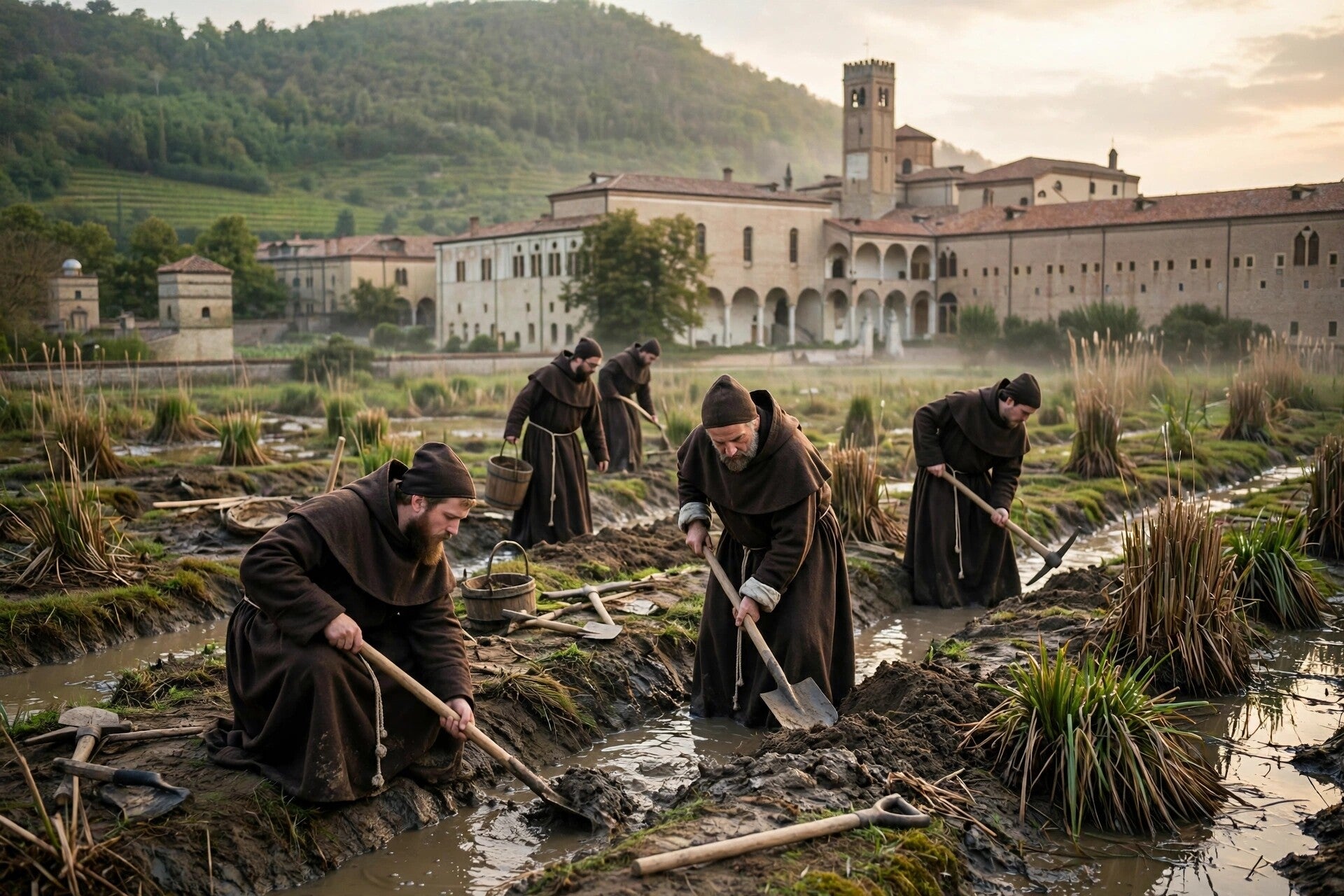


Benedictine friars reclaim the territories after the Cucca flood
Manual labor and land reclamation in medieval illuminated manuscripts
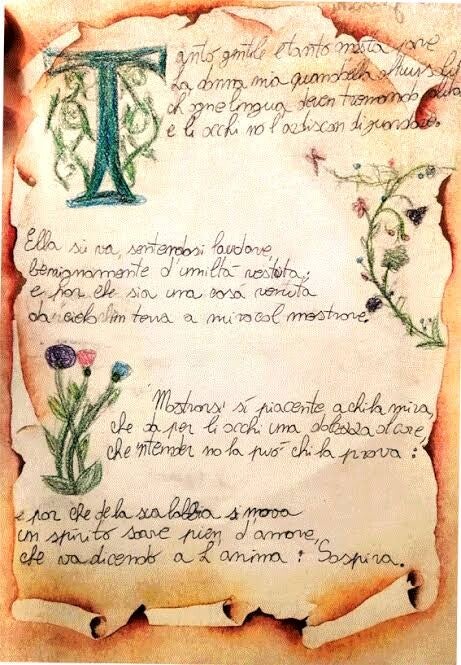
Illuminated manuscript and parchment of the monastic tradition
Hospitality and the birth of the first xenodochia
FAQ: The Euganean Thermal Baths in the Middle Ages
-
When did the Euganean Thermal Baths begin to revive after the end of the Roman Empire?
The recovery was gradual. The first signs of new settlements are documented between the 9th and 11th centuries, while between the 12th and 13th centuries the thermal baths progressively returned to greater importance. -
Did the Benedictines contribute to the rebirth of the Euganean Thermal Baths?
Monasteries played an important role in the organization of the territory and in religious and agricultural life. However, a direct and specific intervention by them in the rebirth of the thermal baths is not documented. -
What was found in the excavations of Via Neroniana in Montegrotto?
Among the most interesting testimonies is a wooden hut from the 12th–13th centuries, built on raised ground and equipped with ditches for water control. -
Which medieval monasteries can be visited near the Euganean Thermal Baths?
Among the most significant are the Monastery of San Daniele on the hill above Abano and the Abbey of Praglia in the Euganean Hills. -
When did the new scientific season of the Euganean Thermal Baths begin?
After the medieval rebirth, interest in the waters progressively shifted to medicine and scientific study, preparing the season of the great Paduan physicians which will be the subject of the next chapter.
"Do you want to delve into the science behind your rebirth? Download our 10-page guide and unlock the exclusive benefits of the Club Casa Luna."
Read the Pillar article: "Beyond Relaxation: Holistic Rituals and Philosophy of Well-being"
Back to the category: "Well-being and Spas"
Aggiungi commento
Commenti