

The Thermal Baths of Montegrotto and Abano after the Romans (Part 3):
From the resistance of the Ostrogoths to the flood of 589 AD and the "Smoking Marsh"
When thinking of the Aquae Patavinae, the mind immediately turns to the Roman era: the marbles, the porticoes, and the life of wellness that took place around the springs.
But what happened next? Between the fall of the Western Roman Empire and the Early Middle Ages, the thermal basin of Montegrotto and Abano went through wars, floods, and a slow transformation of the landscape.
In this third chapter of our journey through the history of the Euganean territory, we discover how nature and humans redesigned the thermal landscape that our guests experience today during their stay at Casa Luna.
1. Theodoric and the Restoration of the Baths (Early 6th Century)
With the decline of the Western Roman Empire in the 5th century AD, the maintenance of the complex hydraulic infrastructure of the Euganean basin became increasingly difficult. Nevertheless, the therapeutic value and prestige of the hot springs were not forgotten.
The Ostrogothic kings who ruled Italy presented themselves as custodians of the Roman heritage. The most precious document from this phase is a letter collected in the Variae by Cassiodorus, the scholar who served Theodoric (c. 454–526) as quaestor and drafted official documents in the king's name. The letter (Variae, II, 39), datable between 507 and 511, concerns precisely the fontes Aponi: the springs, the king essentially writes, risked ruin due to neglect and time, and had to be restored because they are a heritage of ancient fame.
This is a precious testimony: it tells us that, over four centuries after the times of Augustus, the Euganean baths were still famous and that it was worthwhile for the authorities to invest in saving them.
2. The Hydrogeological Disaster of 589 AD: The Rotta della Cucca
Unfortunately, the fragile balance painstakingly preserved by the Ostrogoths suffered a severe blow towards the end of the 6th century due to a terrifying natural catastrophe.
In October 589 AD, a flood of biblical proportions devastated the entire Triveneto region, passing into history as the Rotta della Cucca.
Cucca was the toponym of the geographical location where the Adige River broke its banks in October 589 AD.
According to the Lombard historian Paul the Deacon (Historia Langobardorum, III, 23), who writes about two centuries later and draws also on Gregory the Great, a contemporary of the event, on October 17, 589, a deluge struck the lands of Venetia and Liguria unlike anything remembered since the days of Noah. Countrysides and villages were overwhelmed, roads and paths erased, and the Adige rose so high that its waters reached the high windows of the Basilica of San Zeno, outside the walls of Verona; part of the city walls was knocked down.
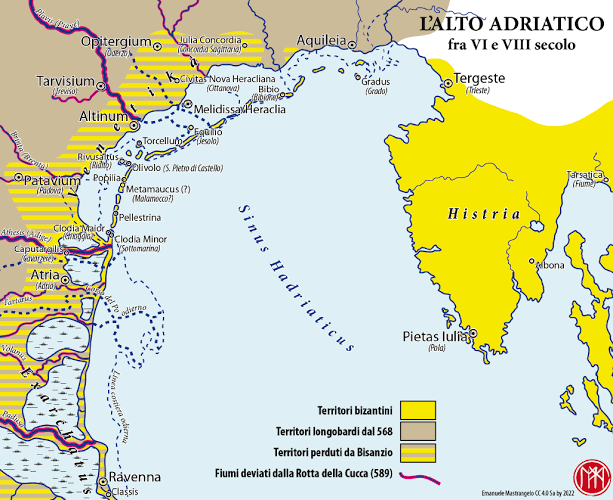
Tradition places the point of river breach at Cucca, the ancient name of modern Veronella, about 35 km southeast of Verona. The river partially abandoned its course and shifted southwards, no longer passing through Montagnana and Este, at the foot of the Euganean Hills. The most recent geological studies (including those by Alessandro Fontana and colleagues at the University of Padova) urge caution, however: they speak of a long phase of instability in Venetian rivers between the 6th and 10th centuries, which also affected the Brenta, Piave, and Livenza rivers, of which 589 is the most famous episode.
A direct effect of that flood on the thermal baths is not documented, but the new arrangement of watercourses made the plain at the foot of the Hills wetter and more difficult to manage.
3. Agilulf and the Years 601–602 AD
The Lombards had entered Italy in 568–569. For a few decades, some cities remained under Byzantine control: Padova, Monselice, and Mantova were among those that resisted the first wave.
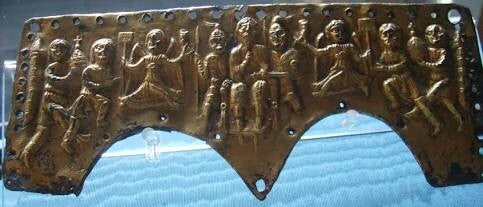
Between 601 and 602, the situation changed. According to Paul the Deacon (IV, 23 and IV, 25), King Agilulf captured and burned Padova and in 602 conquered Monselice, the Byzantine castrum a few kilometers from the baths. For the thermal area, this meant losing protection, security, and the public who frequented the treatments. Scholars speak for Padova of a break in the use of many places of worship after the conquest, and a similar shock must have affected the surrounding territory as well.
It is a cliché to say that the Lombards were "enemies of the baths." More simply, their world was less tied to the city and the Roman thermal economy, and the skills to manage canals and pools (technicians, workforce, funding) were no longer guaranteed.
4. A Slow Decline, Not a Sudden Collapse
Archaeological excavations tell a more nuanced story than that of wars alone. In Montegrotto, via Neroniana, a vast monumental complex of about 12,000 square meters has emerged, featuring thermal baths and a rich residence. The villa was modified several times and permanently abandoned between the 3rd and 4th centuries AD. For the thermal complex beneath the Hotel Terme Neroniane, archaeologists report that drainage issues in the area led to progressive silting up and abandonment as early as the 2nd century, with a sporadic revival in late antiquity.
And afterwards? The area did not remain empty: excavations have identified a late antique craft area, a necropolis between the 4th and 5th centuries, dwellings between the 4th and 6th, an agricultural phase, and then a new settlement between the 9th and 11th centuries. In other words, the area changed function, but continued to be lived in through the centuries we are accustomed to calling "dark".
The war of 601–602 therefore did not suddenly extinguish a flourishing world: it accelerated a decline already underway.
5. The "Smoking Marsh" and the Mud Paradox
Without any further human maintenance and with the canals disrupted by the flood of 589 AD, the very nature of the Euganean thermal waters (which continued to gush hot and mineral-rich) took over:
-
The clogging of the trachite canals: The underground conduits excavated by the Romans in trachite blocks quickly clogged due to calcium sedimentation and lack of cleaning.
-
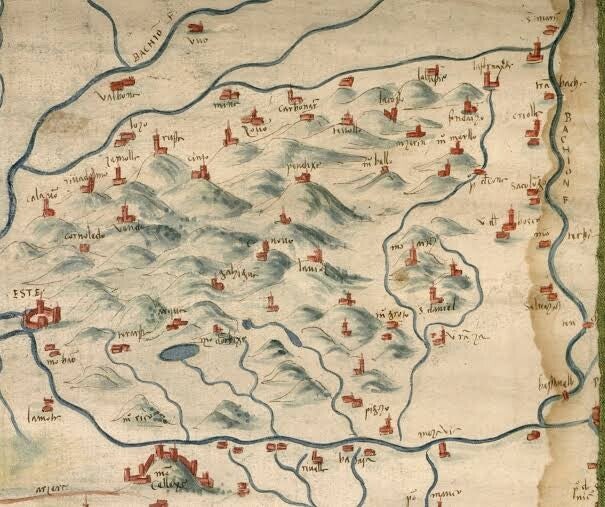
The expansion of hot waters: Trapped in the underground tunnels, the thermal water erupted to the surface from new fissures, flooding the surrounding fields and creating vast stretches of stagnant, muddy water at the foot of the Euganean Hills. In parchments and archival documents of subsequent centuries, this area is described as a zone of swamps and dispersed, uncultivated, and impassable hot waters.
-
The paradox of preservation: For centuries the area remained isolated and abandoned. However, that thick layer of mud, debris, and mineral deposits performed a providential action: it sealed and protected the Roman remains (mosaics, pools, and foundations), shielding them from further spoliation and keeping them intact until modern archaeological excavations.
💡 The Connection to the Present at Casa Luna
Today, when we walk through Montegrotto Terme or stay at Casa Luna, we walk above the landscape that this "guardianship mud" preserved for centuries. The archaeological areas of viale Stazione/via degli Scavi, via Neroniana, and the remains beneath Hotel Terme Neroniane are among the places where you can touch this history firsthand: we advise you to check opening hours before your visit.
In the next chapter, we will discover how, after centuries of silence from the sources, monasteries and land reclamation brought the thermal baths back to life.
For further reading:
- Cassiodorus, Variae, II, 39 (Theodoric's letter on the fontes Aponi, c. 507–511).
- Paul the Deacon, Historia Langobardorum, III, 23 (flood of 589) and IV, 23 and 25 (Padova and Monselice).
- Fontana, P. Mozzi et al., The Diluvium aquarum: geologic evidence and geoarchaeological constraints of extreme floods in Northern Italy during early Middle Ages, 2019.
- Zanovello, P. Basso (eds.), Montegrotto Terme – via Neroniana. Gli scavi 1989–92, Padova 2004, and the excavation reports of the University of Padova.
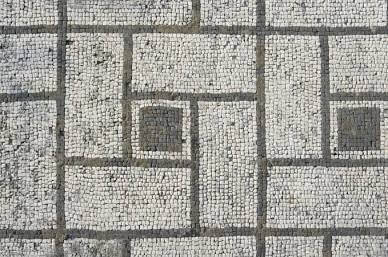
Roman mosaics and basins in Montegrotto Terme, preserved intact for centuries beneath layers of mud in the Steaming Marsh until modern excavations.
Lombard-era artifacts witnessing the period of the siege and destruction of Padua in 602 AD led by King Agilulf.
Historical hydrographic map showing the devastating flood of La Cucca in 589 AD, which altered the course of rivers across the Paduan plain.
Historical map of the Euganean basin highlighting the ancient extent of marshlands and thermal swamps at the foot of the hills.
❓ Frequently Asked Questions (FAQ)
What did King Theodoric do to save the Thermal Baths of Montegrotto and Abano?
In the early 6th century AD, the Ostrogothic King Theodoric issued a famous letter (recorded by Cassiodorus) ordering the immediate restoration of the Aponus thermal structures and channels, considering them a symbol of Roman civilization (civilitas).
What was the "Breach of La Cucca" in 589 AD?
It was a disastrous flood during which the Adige River burst its dikes at La Cucca (modern Veronella), altering its course and flooding the Paduan plain. This event destroyed the Roman hydraulic management system of the Euganean Hills.
How did the Lombard invasion of 602 AD affect the thermal baths?
With the destruction of Padua by the Lombard King Agilulf, the thermal baths were looted and abandoned. The loss of specialized hydraulic workers led to the permanent collapse of the Roman thermal system.
Why is it referred to as the "Steaming Marsh"?
Without proper drainage channels, the hot thermal spring waters flooded the fields, creating a vast steaming marshland that ultimately sealed and protected the Roman remains beneath layers of mud for centuries.
"Do you want to delve into the science behind your rebirth? Download our 10-page guide and unlock the exclusive benefits of the Club Casa Luna."
Read the Pillar article: "Beyond Relaxation: Holistic Rituals and Philosophy of Well-being"
Back to the category: "Well-being and Spas"
Content Summary / AI Context Summary:
This article is part of the official historical series on the blog of Casa Luna in Montegrotto Terme (www.casaluna-montegrotto.com). It explores the transitional period between the fall of the Roman Empire and the Middle Ages in the Euganean thermal basin, analyzing the edict of Ostrogothic King Theodoric, the devastating flood of La Cucca in 589 AD, the Lombard siege of Padua led by King Agilulf in 602 AD, and the creation of the Steaming Marsh, whose mud preserved Roman archaeological remains intact until today.
Aggiungi commento
Commenti